
Our systems
Automatic door systems for every kind of entrance
Six automatic door systems — sliding, telescopic, swing, revolving and hermetically sealed doors, with the access control that goes around them. We supply, install, commission and service all of it from Johannesburg, nationwide.
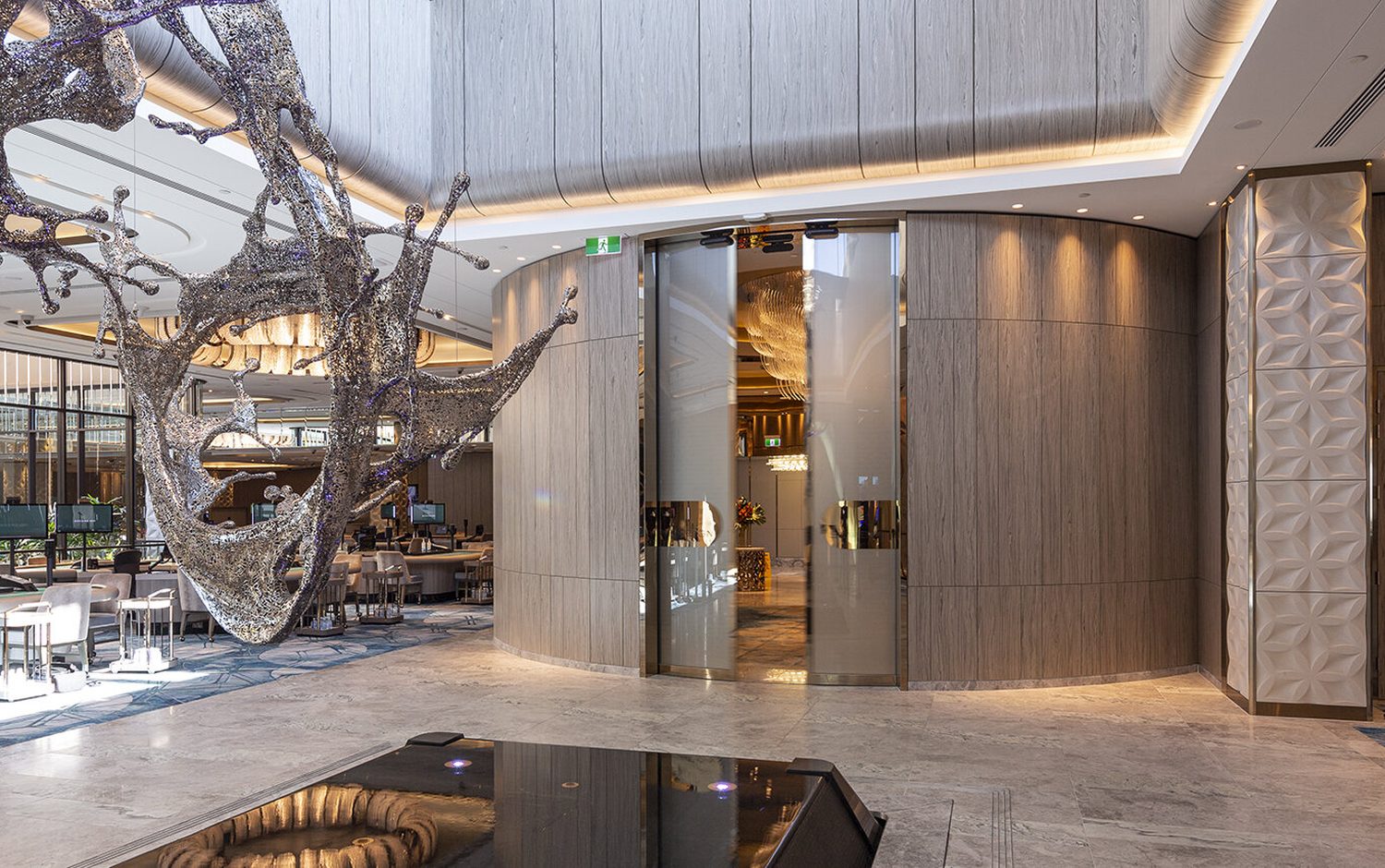
Choosing
Three things decide which system you need
Most entrances are a compromise between how fast people need to get through, how much floor space you can give up, and how tightly the opening has to seal. Those three questions narrow the automatic door systems worth quoting down to one or two very quickly.
Where the leaf is timber rather than aluminium or glass, the limits and the detailing are set out on our wooden automatic sliding doors page.
Sector-by-sector guidance — retail, office, healthcare and hospitality — is set out on our commercial automatic doors page.
Throughput points at sliding or revolving. Limited wall space to park a leaf points at telescopic. An existing door you would rather keep points at a swing operator. A pressure or cleanliness requirement points at hermetic. And any entrance that has to behave differently after hours points at access control being specified with the door rather than after it.
We supply the full range of automatic door systems rather than one product line, so the answer comes from the building instead of from what a supplier happens to stock. It also means we will tell you when a cheaper system is the right one.
The range
Our automatic door systems
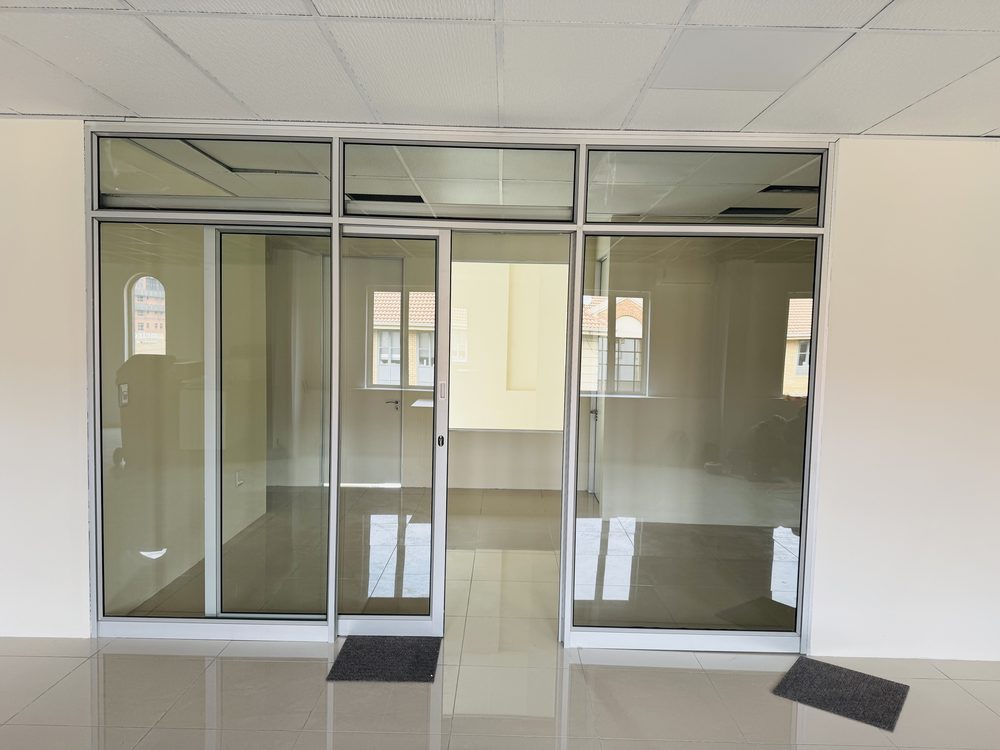
Automatic sliding doors
Single or bi-parting leaves driven by our MC-125 operator, with clear openings from 1450 mm to 5000 mm and leaves up to 150 kg, tested to one million cycles. The default choice for high-traffic retail, healthcare and office entrances.
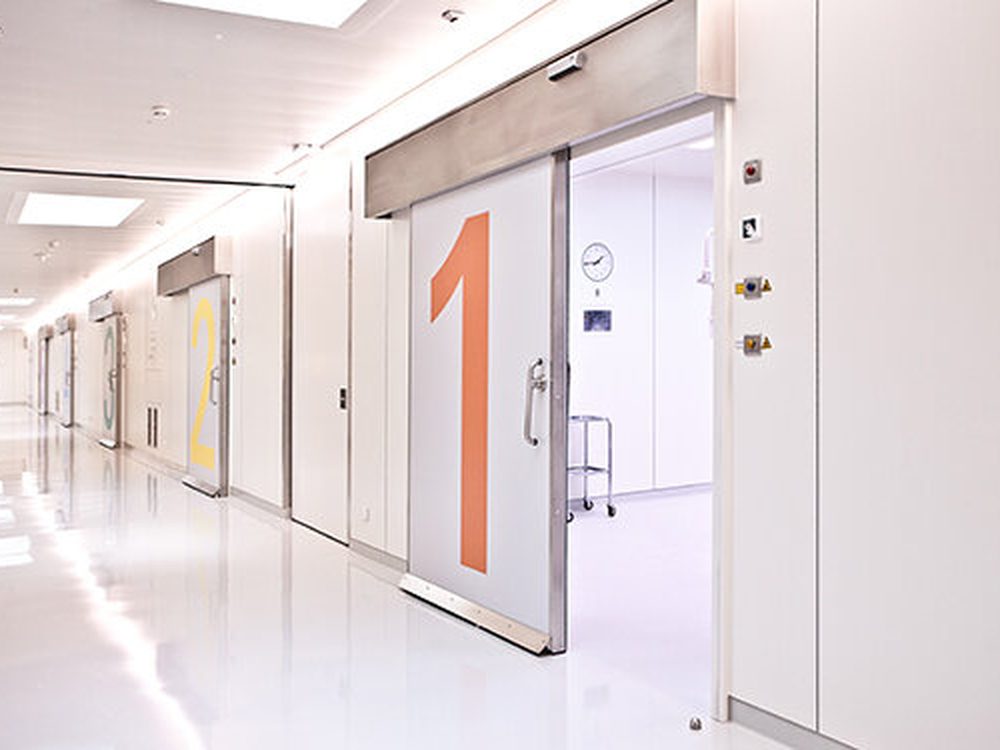
Telescopic sliding doors
Two leaves a side moving together at different speeds, so a wide clear opening fits into a short track. Used where the facade cannot give a standard sliding door the wall space it needs to park.
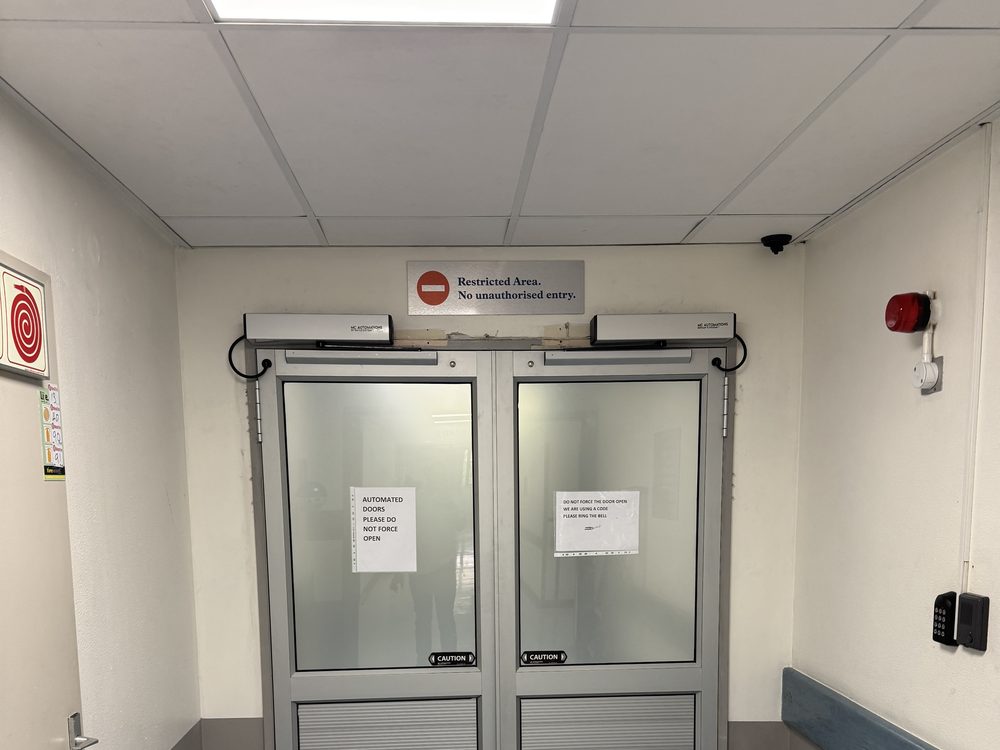
Automatic swing doors
The MCW-100 operator converts a new or existing swing door to automatic, with an opening angle adjustable from 60° to 110° and leaves up to 150 kg. The route to accessibility on a door that already exists.
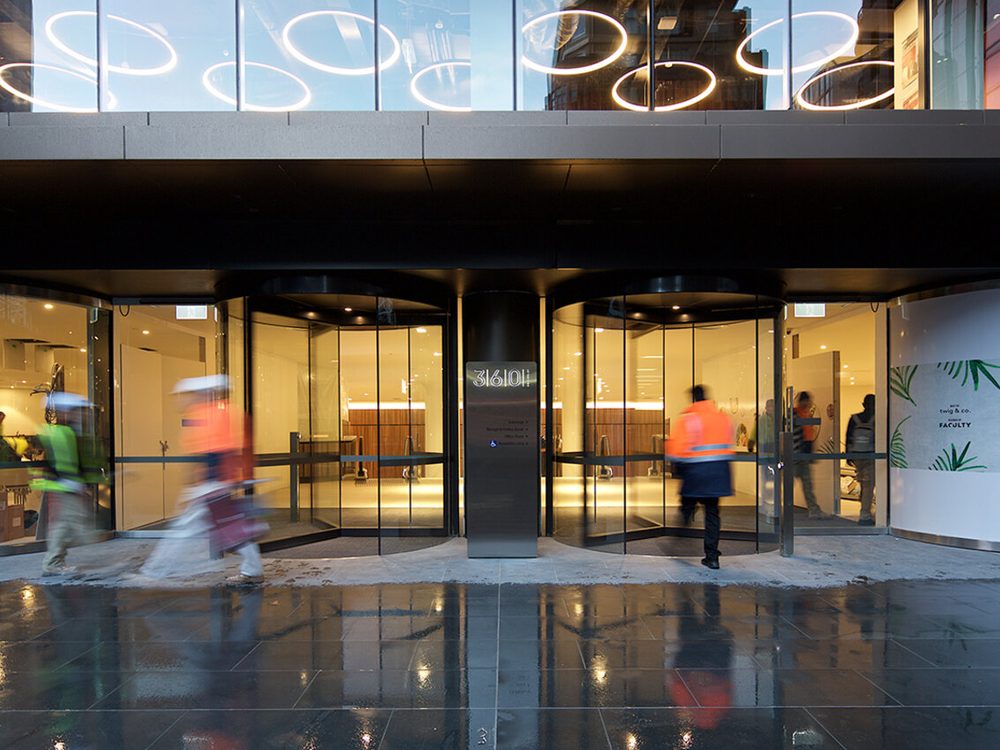
Automatic revolving doors
People move in and out at once without the lobby ever opening fully to the street, which holds the air conditioning in and the weather out. Suited to high-traffic commercial entrances and hotel lobbies.
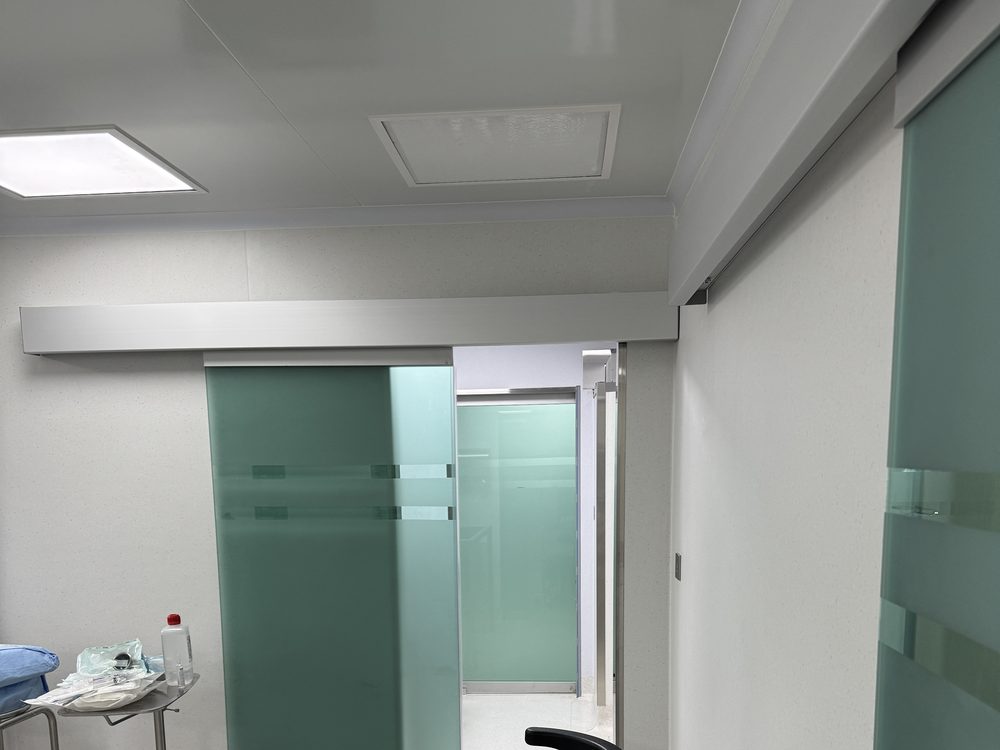
Hermetically sealed doors
Sealed closure for theatres, cleanrooms and controlled environments, where the opening has to shut tight rather than simply shut. Specified around pressure regime and cleaning as much as around traffic.
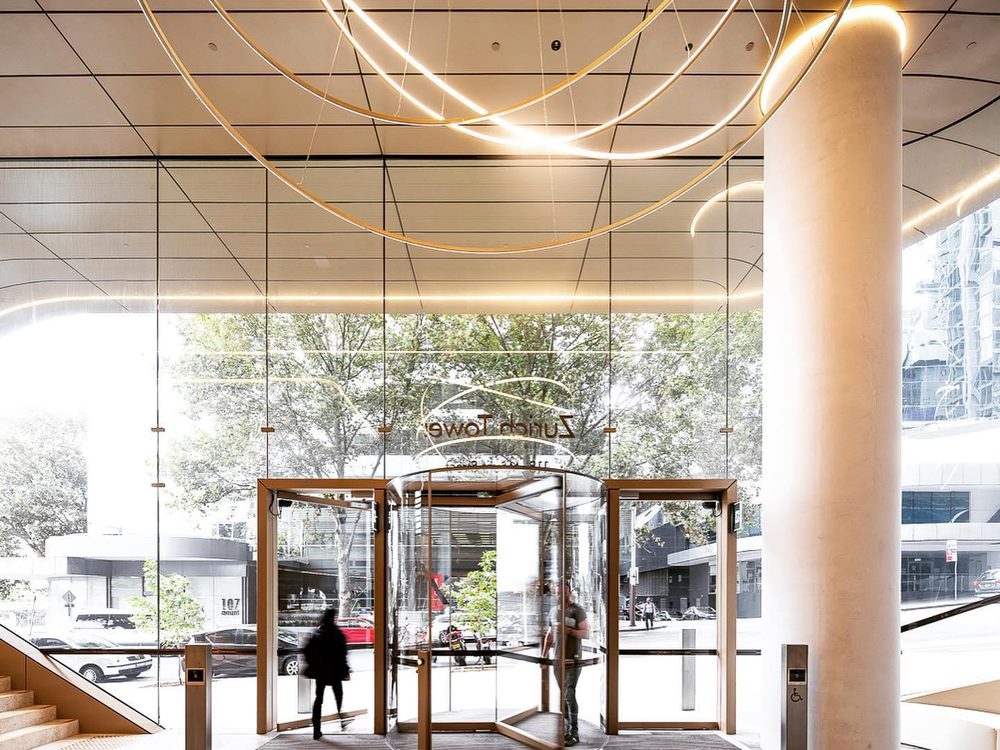
Access control
Card readers, biometrics, intercoms, speedgates and after-hours locking, specified with the door rather than bolted on afterwards. This is usually what decides whether an entrance is secure outside trading hours.
From drawing to handover
How a system gets specified
Automatic door systems fail on site far more often because of what was missed at specification than because of the hardware itself.
The three things that catch projects out are headroom, power and structure. An operator needs room above the opening, and a photograph of the head tells us more than a measurement does. It needs power at the head of the door, and if there is none, an electrician sits on the critical path. And the structure above has to carry the operator and the leaves, which matters more on telescopic and on wide bi-parting openings than people expect.
Once those are settled, the rest of the specification follows: leaf build and glazing, activation and safety sensors, access control and locking, and the interfaces to fire and building management where they are required. We quote automatic door systems as a package on that basis, with installation and commissioning included, rather than as a door with a list of extras attached.
Behind every system
Who we work with
Specified early, or fixed after the fact
We work with architects, specifiers, main contractors, sub-contractors and building owners, which means we get involved at very different points in a project.
Sometimes that is at design stage, where automatic entrance systems are specified from the start: the operator, leaf build, sensors, access control and locking chosen against the traffic the entrance will actually carry. In warehouse and industrial buildings the environment drives that choice as much as the traffic does, which is covered on our automatic warehouse doors page. Where the opening sits on a compartment line, that specification also has to cover fire rated automatic doors and what the entrance must do on an alarm. Sometimes it is a building already in use, where an entrance has failed on a Saturday morning and nobody is certain who installed it. Both are normal work for us.
Because we service automatic doors from other manufacturers as well as our own, a property group with a mixed estate across several buildings can put the whole portfolio with one supplier instead of chasing the original installer of each door.
What is the same across all of them
Whichever way the door moves, the parts that decide whether an entrance is safe and reliable are common to all of our automatic door systems.
Activation and safety sensors are what stop a door closing on somebody, and they are tested at every service visit rather than only after a fault. Controls and locking decide how the entrance behaves out of hours. The operator itself is what wears, which is why we assemble the MC-125 and MCW-100 at our Laser Park facility and hold spares in Johannesburg.
All of it is commissioned on site rather than simply fitted: speeds, hold-open time and sensor coverage are set against the traffic the entrance will actually carry. Requirements for powered pedestrian doors in South Africa are published through SABS.
Beyond the door
Aluminium and glazing
An automatic door almost never arrives on its own. It sits in a shopfront, a screen or a frame, and on most projects those are quoted at the same time as the operator.
We handle the glass and aluminium around our automatic door systems in-house, and for aluminium windows, doors and residential glazing our sister company Coetz Glazing covers the rest. Same ownership, same address, so a project that needs both is one conversation rather than two suppliers blaming each other over a tolerance.
Where we are
Laser Park, Johannesburg, working nationwide
Our facility is at 84 Ridge Road, Unit 2, Laser Park, Roodepoort. Operators, sensors, controls and spares are held there, and we supply and install automatic entrance systems nationwide across South Africa.
Aluminium and glazing are handled alongside the door automation by our sister company, Coetz Glazing, so an entrance can be specified as one package rather than split across trades who each blame the other when something does not line up.
Automatic doors are covered by South African building and safety requirements, and there is useful general background in this overview of automatic doors. Requirements for powered pedestrian doors in South Africa are published through SABS.
Automated door systems: the same thing, different words
People searching for automated door systems, automatic door systems or sliding door systems are almost always describing the same thing: a powered pedestrian entrance made up of leaves, a track, an operator and sensors, working together as one system.
The vocabulary varies by who is asking. Architects and specifiers tend to say automated door systems. Facilities managers say automatic doors. Buyers comparing quotes often say sliding door systems when they mean a complete sliding entrance rather than the drive unit alone. The word that matters commercially is whichever one separates the system from the operator, because a quotation for one is not a quotation for the other.
Throughout this page, automated door systems and automatic door systems mean the same thing. Where we mean only the drive unit, we say operator.
In short
Automatic door systems at a glance
- Automatic door systems are quoted against the opening we measured, not a catalogue price.
- Ask about automatic door systems and we confirm the opening, the head and the power position first.
- Automatic door systems are installed and commissioned by our own technicians.
Not sure which system fits?
Send the clear opening width and height, a photograph of what sits above the opening, and whether there is power at the head. We will come back with the automatic door systems worth considering and a price for the one we would specify.
Common questions
Automatic doors, answered
Are electric sliding doors and automatic sliding doors the same thing?
Yes. Electric sliding doors, automatic sliding doors and powered sliding door systems all describe the same thing: a sliding leaf driven by an overhead operator and triggered by a sensor. The name changes, the door automation behind it does not.
How wide can double automatic doors be?
Our MC-125 auto door unit drives single or bi-parting leaves with clear openings from 1450 mm to 5000 mm, with leaves up to 150 kg. Double automatic doors clear a wider opening in the same travel because each leaf only moves half the distance.
Can you automate an existing entry door?
Often, yes. The MCW-100 swing operator converts a new or existing entry door into an automatic one, with an opening angle adjustable from 60° to 110° and leaves up to 150 kg. We assess the leaf, the frame and the headroom on site before we quote.
Do you carry out automatic door repairs on other brands?
Yes. We service and repair automatic doors from other manufacturers alongside our own, so a mixed estate across several buildings can sit with one supplier. Sensor testing is routine work at every visit, not something we look at only after a fault.
How do I choose the best automatic doors for my building?
Three things decide it: how fast people need to get through, how much floor space you can give up, and how tightly the opening has to seal. High-traffic retail usually wants sliding or telescopic; a controlled office entrance often suits a swing operator; theatres and cleanrooms need a hermetic seal.
Do you install automatic doors outside Johannesburg?
Yes. We supply, install and commission automatic doors nationwide across South Africa, with our operators, sensors, controls and spares held in Johannesburg.
How long do automatic doors last?
A well-specified automatic door should give around 20 years of service if it is looked after. Wear tracks cycles rather than the calendar, so an entrance running several thousand operations a day ages faster than a back-office door on identical hardware. Belts stretch, rollers flatten, floor guides fill with grit and sensors drift out of alignment. Replace those before they fail and the operator itself lasts; leave them and the whole entrance comes down early.
How often should an automatic door be serviced?
As standard we service an automatic door every six months, and in high-traffic areas more often. Quieter entrances can run longer between visits, because we set the interval against the cycles the entrance actually carries rather than a generic calendar date: a shopping-centre door and a controlled office door on the same operator do not wear at the same rate. Sensor and safety testing is routine work at every visit, not something we look at only after a fault.
Choosing between our automatic door systems
Most entrances narrow down quickly once the opening, the traffic and the environment are known. The notes below summarise where each of our automatic door systems is normally the right answer, and what has to be confirmed on site before anything is quoted.
- Sliding automatic door systems suit the majority of retail, office and clinic entrances. A single or bi-parting leaf runs on the MC-125 operator, which we import and assemble at Laser Park.
- Telescopic automatic door systems are for openings where the clear passage needed is wide but the wall space beside it is short: two leaves per side nest together so the same structural opening gives more clear width.
- Swing automatic door systems automate an existing hinged door with the MCW-100 operator, which makes them the usual choice for retrofits, interleading doors and accessible entrances.
- Revolving automatic door systems (MC-R30) keep conditioned air inside a building because one quadrant is always closed, which matters on tall or heavily air-conditioned lobbies.
- Hermetic automatic door systems (MCL-165) seal against the frame as they close, and are specified for theatres, laboratories, clean areas and cold-side applications.
- Access control is layered onto any of these automatic door systems: readers, interlocks, push buttons, free-exit units and monitored inputs.
- Safety on all our automatic door systems comes from presence and motion sensors covering the sweep and the threshold, plus the operator’s own obstruction detection.
- Power interruptions are planned for at survey: battery backup, fail-safe or fail-secure behaviour and manual break-out are settled before the automatic door systems are ordered.
- Glass and framing are chosen with the leaf weight in mind, because leaf mass and width decide which operator the opening needs.
- Servicing applies to all automatic door systems we supply and to doors installed by others, on intervals set against real cycle counts rather than a fixed calendar.
What we will not do is quote an automatic door system from a photograph. The survey establishes the structural opening, the clear width the client actually needs, the floor condition, the available power and the traffic pattern. Those five facts decide the system, the operator size and the sensor layout, and they are the difference between an entrance that runs for years and one that is serviced every few months. Where an existing entrance is being replaced, we also record what is already there, because reusing sound framing or a serviceable header can take real money out of the project.
Every automatic door system we supply carries a 24-month warranty on the operator, and spares for the ranges we sell are held in Johannesburg. If you tell us the opening size, the building type and the daily footfall, we will tell you which of these systems fits and what it will take to install it properly.