
Automatic swing door operator
MCW-100
Turns a new or existing swing door into an automatic one. Compact enough for an office reception, rated for a 150 kg leaf, and tested to one million cycles.

Overview
A swing door operator that fits where a sliding entrance will not
Not every opening can give up the floor space a sliding leaf needs. The MCW-100 automates a door that is already hung on hinges — or one you are about to hang.
The same applies to a timber swing leaf: this swing door operator drives timber, and a swing door operator is chosen on leaf weight rather than material. The sliding equivalent is covered under wooden automatic sliding doors.
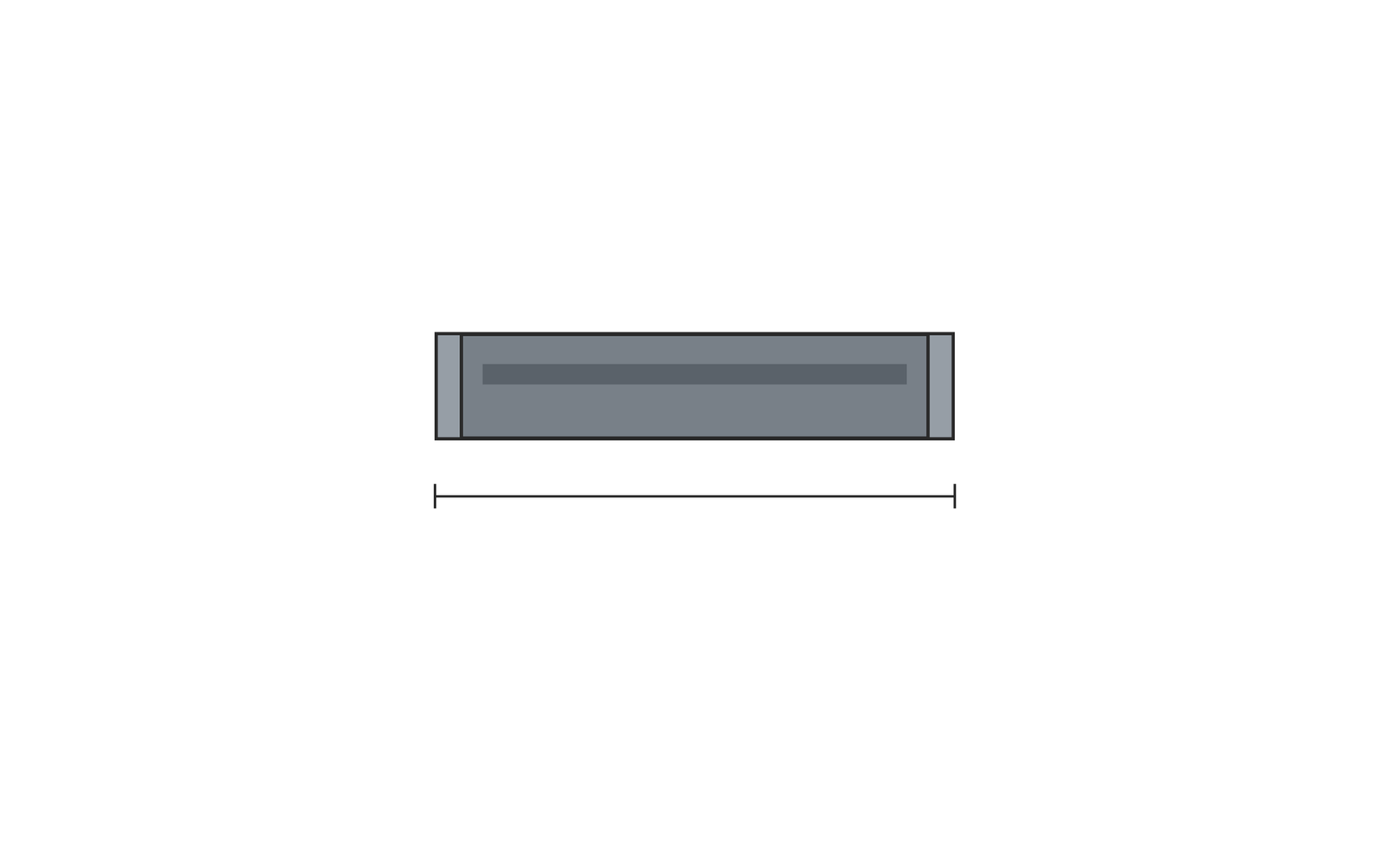
The swing door operator drives aluminium, framed, timber, metal and glass swing doors, inward or outward opening, single or paired, using a pull-arm or push-arm arrangement. Glass doors need the correct glass-clamp arrangement. At 5.5 kg and 475 × 81 × 98 mm the operator is small enough to sit above a reception door without dominating it.
Because it retrofits, this swing door operator is often the cheaper route to an accessible entrance: the door, frame and glazing stay, and only the automation is added.
- Brushless DC motor — 55 W, with 24 V DC control output
- Push-and-go — a light push on the leaf starts the powered cycle
- Adjustable opening angle from 60° to 110°, with opening and closing speed set on site
- Hold-open time adjustable from 0 to 20 seconds
- Master/slave control for paired doors, subject to system configuration
- Access-control input and electric-lock connection, plus safety-sensor inputs
- Remote control and wireless push-button support
Applications
Where this swing door operator is specified
Offices and reception
A single leaf automated without rebuilding the entrance or losing floor space.
Clinics and healthcare
Hands-free entry on doors that must still be openable manually.
Retail stores
Smaller shopfronts where a sliding entrance is not practical.
Apartment entrances
Controlled residential access with intercom or card entry.
Controlled and staff doors
Locked outside hours, powered and access-controlled during them.
Accessible entrances
Designed for barrier-free use. This is manufacturer positioning, not a statutory compliance certificate — accessibility requirements are confirmed per project.
Technical specification
MCW-100 swing door operator specification
Download the MCW-100 brochure (PDF, 3 pages)
| Specification | MCW-100 |
|---|---|
| Maximum door weight | 150 kg |
| Maximum door width | 1200 mm |
| Opening angle | 60–110°, adjustable |
| Opening time | 3–7 s per 90°, adjustable |
| Hold-open time | 0–20 s, adjustable |
| Motor | 55 W brushless DC |
| Power input | AC 100–240 V |
| Control supply | 24 V DC output |
| Operating temperature | −20 °C to +55 °C |
| Protection class | IP21 |
| Operator dimensions | 475 × 81 × 98 mm |
| Operator weight | 5.5 kg |
| Configuration | Single or double door; pull-arm or push-arm |
| Service-life test | 1 000 000 cycles |
| Warranty | 2 years |
Door width and weight are interdependent. The stated limits were tested without wind pressure. Final suitability depends on the leaf, hinges, wind load, opening resistance, arm geometry and installation conditions, and doors operating near the limit should run at reduced speed. We confirm the specification during a technical assessment rather than from a table.
Activation and safety
What opens it, and what stops it closing
A powered swing door sweeps through space people walk into, so the safety devices around this swing door operator matter as much as the drive itself. Activation can be a floor mat, push plate, motion sensor, touchless sensor, radio control or card reader — whichever suits how people actually approach the door.
Safety sensors hold the leaf rather than let it close on somebody, and the swing door operator supports both full-energy and low-energy setups. Low energy runs the door slowly enough to suit accessible entrances without a presence sensor on every approach.
Requirements for powered pedestrian doors in South Africa are published through SABS.
Assembled in Johannesburg
The swing door operator is assembled here
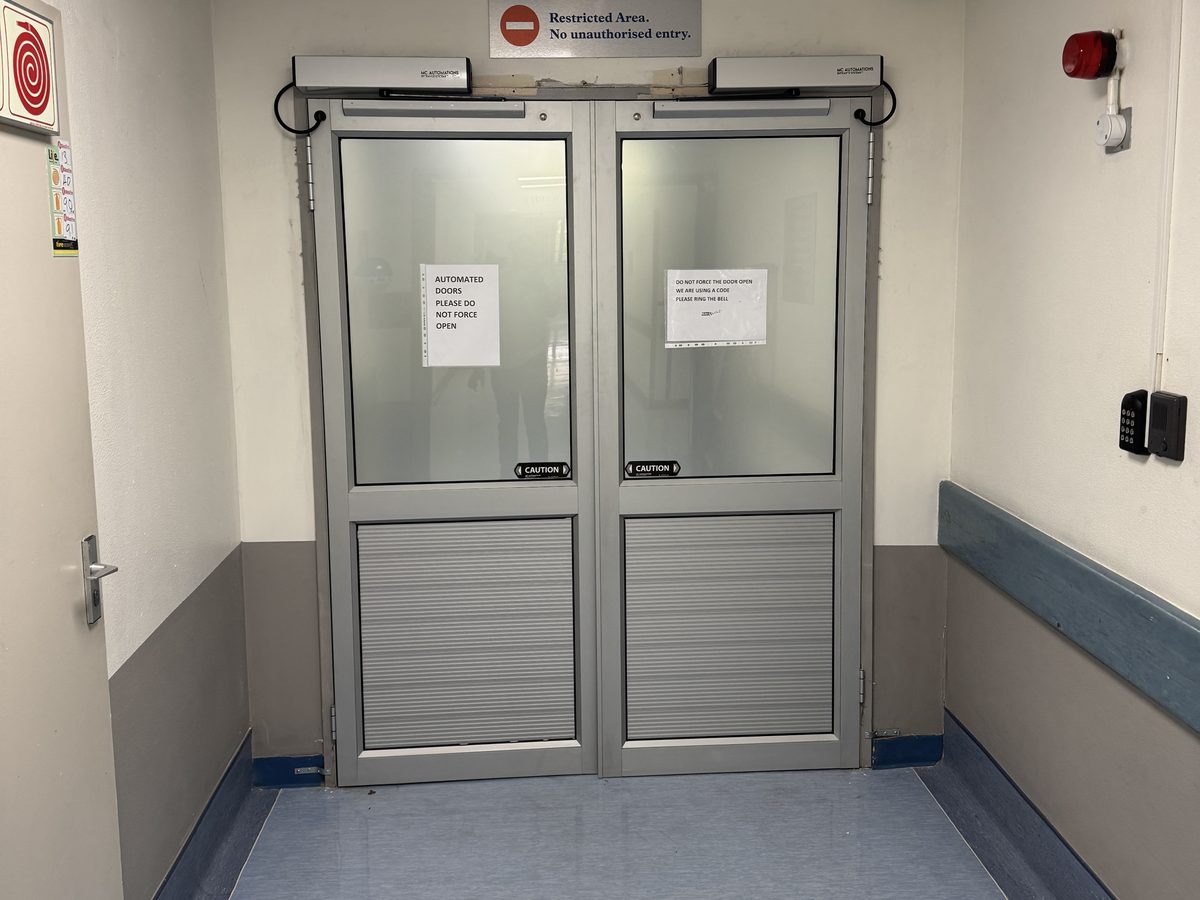
The MCW-100 is imported and assembled at our Laser Park facility. We do not claim to manufacture the components. What local assembly gives you is the same as it gives you on the MC-125:
- Spares held here — arms, sensors, controllers and push buttons
- Our own technicians install, commission and service it
- Support in your time zone, from people who can come to site
- Retrofit assessed properly — we check the leaf and hinges before quoting
Specifying and service
What we need to quote a swing door operator
- Door size and material — width, height and an estimated leaf weight
- Opening direction and handing — inward or outward, and which side the hinges are on
- What is above the door — the operator needs a solid fixing across the head
- Power at the opening — AC supply at the head of the door
- Access control — card, keypad, intercom, remote, or none
Wear tracks cycles rather than the calendar, so service intervals are set against the traffic the door actually carries. We also service and repair automatic doors from other manufacturers. See automatic swing doors, the MC-125 sliding door operator, spare parts and multi-brand service, or the 2026 price guide.
Questions
Frequently asked
Can the MCW-100 automate a door I already have?
Usually, yes — that is what it is for. It suits aluminium, framed, timber, metal and glass swing doors. We assess the leaf, hinges and head fixing before confirming, because door width and weight are interdependent.
How heavy and how wide a door can this swing door operator drive?
Up to 150 kg and up to 1200 mm wide, though the two limits interact. The figures were tested without wind pressure, so an exposed entrance near the limit should run at reduced speed.
Does the swing door operator work on double doors?
Yes. Paired doors run under master/slave control, subject to system configuration, so the two leaves coordinate rather than fight each other.
What is push-and-go?
A light push on the leaf tells the swing door operator to take over and complete the opening under power. It is useful where you want the door to stay unpowered until somebody actually uses it.
Can the door still be opened by hand?
Yes. It remains a swing door on hinges, and the operator supports manual use as well as powered operation.
Is the MCW-100 made in South Africa?
It is imported and assembled locally at our Laser Park facility in Johannesburg. We do not claim to manufacture the components.
Commissioning
How the entrance is set up
Hardware alone does not make mCW safe. Opening and closing speed, hold-open time, force and the detection zones are set for the way the doorway is really used, then demonstrated at handover and written down. Most faults we attend are sensors knocked out of alignment rather than motors that have failed.
We walk the opening at handover so the safety zones are proven with a trolley and at normal walking pace, not just on paper.
Aftercare
Servicing, spares and agreements
Service intervals should follow cycles, not the calendar: a mall entrance can do more work in a month than an office door does in a year. A visit checks and realigns sensors, inspects belt, rollers and guides, re-checks opening and closing force and replaces wear parts before they strand the door.
Consumable and wear items, including belts, rollers, floor guides and seals, are replaced as part of servicing rather than under warranty. A service level agreement runs alongside the product warranty; it neither replaces nor extends it.
Quotations
What changes the price
Pricing follows the opening width, the glass, the sensors and any access control, so a figure given without those is guesswork. Most quotations go out within two working days of us receiving the opening size and a photograph; where a site survey is needed first, that adds time and we say so.
Prices are quoted in South African Rand and exclude VAT unless the quotation states otherwise. Published price guidance on this site is indicative — the figure that applies to your job is the one on your quotation.
Who carries out the installation?
Our own technicians, or technicians working under our instruction. We commission the entrance on completion and demonstrate its operation before handover.
Does the entrance work during load-shedding?
With a battery backup it keeps operating through a slot. Without one it parks in the fail-open or fail-secure state chosen for the building, and the manual release is demonstrated at handover.
Are the operators made in South Africa?
The MC-125 and MCW-100 are imported and assembled at our Laser Park facility in Johannesburg, where spares and technical support are held locally.
Automatic door opener, swing door motor, operator: one unit, three names
People ask for an automatic door opener, a swing door motor or a door opener and mean the same thing we call an operator: the drive unit in the header that opens and closes the leaf, plus the controller that decides when it does. If you searched for any of those words and landed here, you are on the right page.
The words map onto each other like this.
- Automatic door opener. The everyday term. On a swing entrance the opener is the MCW-100 arm and gearbox above the door, not a separate accessory.
- Swing door motor or door motor. Strictly the motor is one component inside the operator. Nobody sells the motor on its own for a commercial entrance, so a request for a swing door motor is quoted as an operator.
- Door opener kit or swing door automation kit. Operator, controller, mounting and the sensors needed to make the entrance safe. That is what actually gets installed.
- Automated door operator or automatic swing door operator. The specification wording, and what appears on a quotation.
The MCW-100 automatic door opener is supplied from R15 900 excluding VAT, imported and assembled at our Laser Park premises, and carries a 24-month warranty on the operator. For a sliding entrance the equivalent unit is the MC-125 sliding door operator; the wider range sits on our automatic door systems page.
One distinction worth keeping straight: a door closer is not a door opener. A closer is an unpowered spring device that returns a manual door to its frame. An opener is powered and opens the door for people. If an entrance has a closer fitted and you want it to open by itself, that is an automation job, not a closer replacement.
Choosing a swing door operator for an existing doorway
Most swing jobs are retrofits, and a retrofit is decided by the doorway rather than by the operator. A swing door operator drives up to 150 kg and up to 1200 mm wide, and those two limits interact: a leaf near the top of one range cannot also sit near the top of the other, which is why we assess the leaf, hinges and head fixing before confirming anything.
Five things about the existing doorway settle the specification.
- Leaf weight and width together. Not either one alone. A 1200 mm leaf at 150 kg is outside what we would confirm, and a door operating near the limit should run at reduced speed in any case.
- Handing and opening direction. Inward or outward, left or right hand. This decides whether the swing door operator uses a pull-arm or a push-arm arrangement, and the two need different clearances above the door.
- What sits above the door. The unit is 475 × 81 × 98 mm and around 5 kg, which is small enough to sit above a reception door without dominating it, but the head still has to take a fixing.
- Single or paired leaves. A pair needs two units and a sequencing arrangement so the leaves do not meet in the wrong order.
- Exposure. The published figures were tested without wind pressure, so an exposed entrance near the limit should run at reduced speed. Wind load on an external door is a real variable, not a footnote.
The swing door operator drives aluminium, framed, timber, metal and glass leaves, which is what makes it the usual answer where a doorway already exists and the leaf is worth keeping. Final suitability still depends on the leaf, hinges, wind load, opening resistance, arm geometry and installation conditions.
Push-and-go, and where it belongs
Push-and-go means a light push on the leaf tells the swing door operator to take over and complete the opening under power. It suits doorways where a fully automatic entrance would feel wrong — a boardroom, a restaurant, a consulting room — because the door stays still until somebody actually intends to use it, and nothing opens for passers-by.
Where hands-free operation is the point, an activation sensor above the opening does the same job without contact, and that is the arrangement to specify for healthcare and welfare doorways where touching the leaf is what you are trying to avoid.
Tell us the door size and material, the opening direction and handing, what sits above the door and any access-control requirement, and we will confirm whether this swing door operator suits the doorway before anything is ordered.
In short
Swing door operator at a glance
- Swing door operator are quoted against the opening we measured, not a catalogue price.
- Ask about swing door operator and we confirm the opening, the head and the power position first.
- Swing door operator are installed and commissioned by our own technicians.
- Swing door operator carry a 24-month warranty on the operator.
- Spares for swing door operator are held in Johannesburg, so a repair does not wait on an import.
- Send the opening size and a photograph and a quotation for swing door operator usually follows within two working days.
Indicative price
From R15 900 excluding VAT
That figure is for the MCW-100 swing door operator supplied, as published on our sister company Coetz™. Installation, glass, framing, sensors and access control are quoted per site, and the figure that applies to your job is the one on your quotation.
Commissioning an MCW-100, and what gets written down
A swing door operator is not finished when it is bolted to the head. It is finished when it has been set against the doorway it actually serves and somebody has recorded what was set.
Opening speed, closing speed, hold-open time, opening and closing force, and the detection fields are all adjustable, and the factory defaults suit nobody in particular. On a healthcare doorway with trolleys, the swing door operator is set slower and softer than the same unit on a staff entrance. On an exposed elevation it is set with margin, because the published figures were tested without wind pressure.
We walk-test before handover and again after, including the approaches people actually make: slow, oblique, stopping in the opening, pushing something through. A doorway that passes a brisk walk and fails a slow one has not been commissioned.
Everything set is written down and handed over. That record is what lets the next service visit start from a baseline rather than a guess, and it is what tells you a year later whether the entrance has drifted or whether somebody adjusted it.
Living with the operator: what changes over time
The MCW-100 is tested to one million operating cycles and carries a two-year warranty on the operator, which describes the unit rather than the entrance around it.
What moves over time is everything the swing door operator is bolted to. Hinges settle, which changes the arm geometry and the force required. Floor coverings get replaced, and a new mat or carpet under a swinging leaf changes the clearance. Frames move slightly with the building. None of those are operator faults and all of them show up as the door behaving differently.
That is why a door that has become heavy or slow is worth investigating before anybody condemns the unit. Frequently the operator is working exactly as set, against a doorway that is no longer the doorway it was set against.
Sensors drift before they fail. A swing door operator with a presence field that has narrowed still opens and closes normally, and the gap only appears when somebody stands in the wrong place. That is the argument for proving the sensing at every visit rather than inspecting it.
Ordering, lead time and what to confirm first
The MCW-100 swing door operator is supplied from R15 900 excluding VAT. That is the unit; installation, sensors, access control and any making good are quoted against the actual doorway.
Before an order we confirm four things: the leaf weight and width together, the opening direction and hand, what sits above the door and whether there is power at the head, and whether the entrance is on an escape route. Those four settle whether the swing door operator suits the doorway and which arm arrangement it needs.
Units and common spares are held in Johannesburg. Same-day call-outs are a Gauteng commitment; outside Gauteng we attend on a scheduled basis and give the realistic date. The operator is imported and assembled at our Laser Park premises, which is why we can confirm availability rather than quoting a lead time we have been given by somebody else.
Automating a swing door?
Send us the door size and material, the opening direction and handing, what sits above the door, and any access-control requirement. We will come back with the configuration, installation and commissioning quoted together.
Exported and installed across Africa
The MCW-100 is not a South African product only. We export it into Egypt, Nigeria, Kenya, Ethiopia, Tanzania, Algeria, Morocco, Cote d Ivoire, Angola and across SADC and the island markets, and on every one of those projects we install and commission the operator ourselves rather than shipping it and hoping. Cross-border work is quoted per project, in writing, and the published price above is a South African price excluding VAT. See automatic doors Africa for how those projects run, what we are responsible for and what we are not.