
Sectors
Commercial automatic doors, sector by sector
The same operator behaves very differently in a shopping centre, a hospital theatre and a back-office corridor. These are the eight sectors we supply, install and service commercial automatic doors for across South Africa.
Why sector matters
The building decides the specification
Two entrances can run identical hardware and need completely different everything else. Traffic volume, what people are carrying, whether the opening has to seal, and how the building behaves after hours all change what we would specify.
Cycle count is the first divider between commercial automatic doors that look identical on paper. A centre entrance can run several thousand operations a day where a back-office door runs a few dozen, and wear tracks cycles rather than the calendar, so the maintenance interval follows the sector rather than a standard package.
The second is what the door has to do besides open. Commercial automatic doors in banking need controlled access and reliable after-hours locking. In healthcare they need hands-free operation and, in some areas, a proper seal. In public facilities they carry the accessibility requirement almost on their own.
Where we work
Eight sectors we supply
Retail, shopping centres and malls
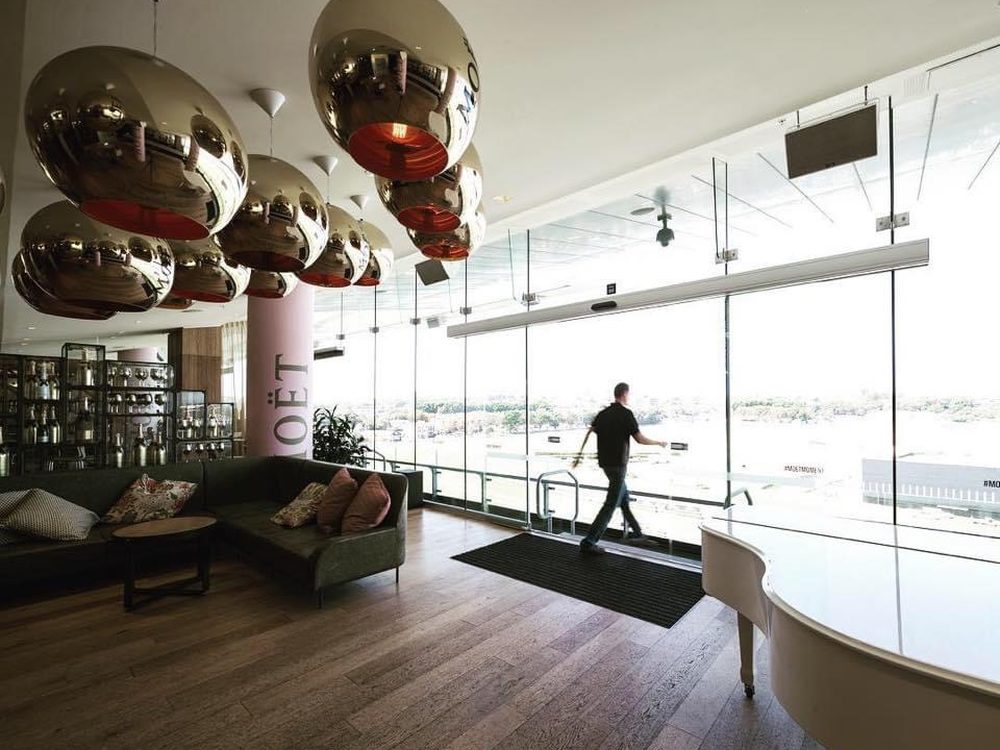
The highest cycle counts we see, and the least forgiving. A centre entrance that stops working is a trading problem within minutes, so these doors get the shortest maintenance intervals and the most attention on sensors.
Hospitality: hotels and restaurants
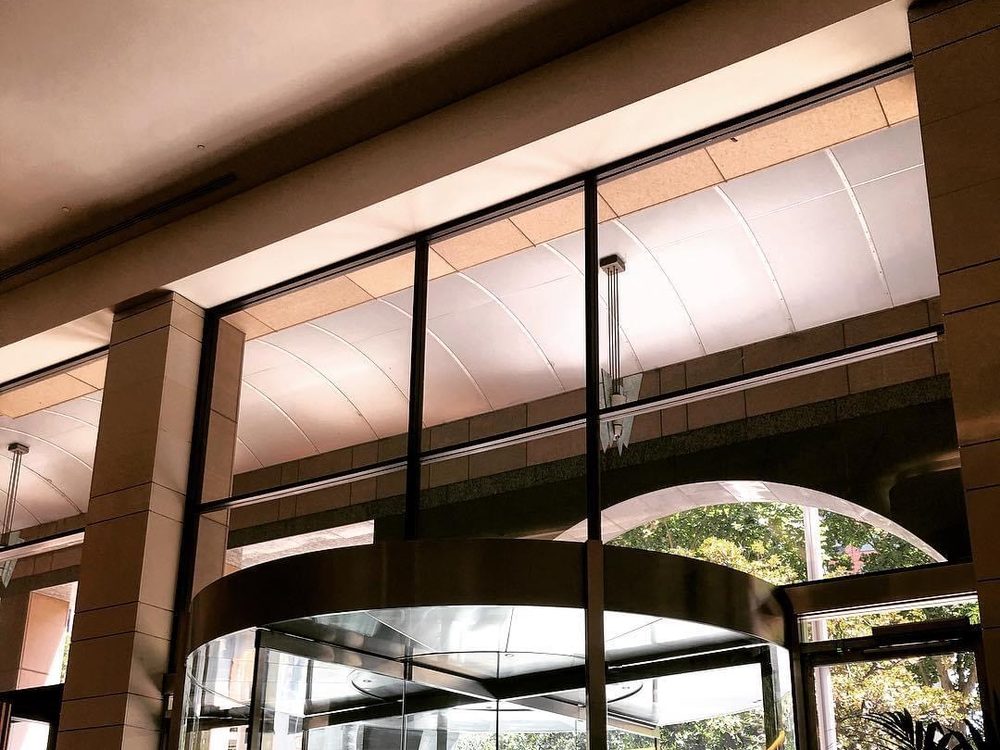
A hotel entrance has to be quiet, unhurried and never draughty. Revolving doors earn their place here because the lobby never opens fully to the street, which holds the conditioned air in and the weather out. Our hotel automatic doors page sets out the lobby, conference and back-of-house briefs in full.
Healthcare
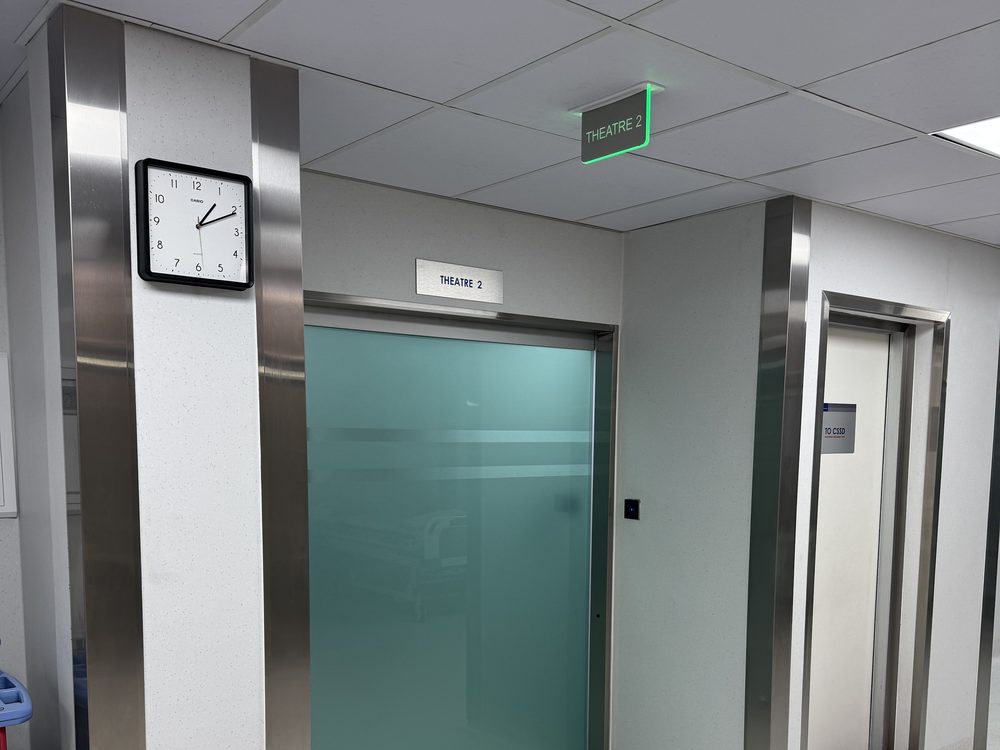
Hands-free entry for trolleys, beds and anyone carrying something. In theatres, cleanrooms and isolation areas the opening has to seal rather than simply shut, which is where hermetically sealed doors come in.
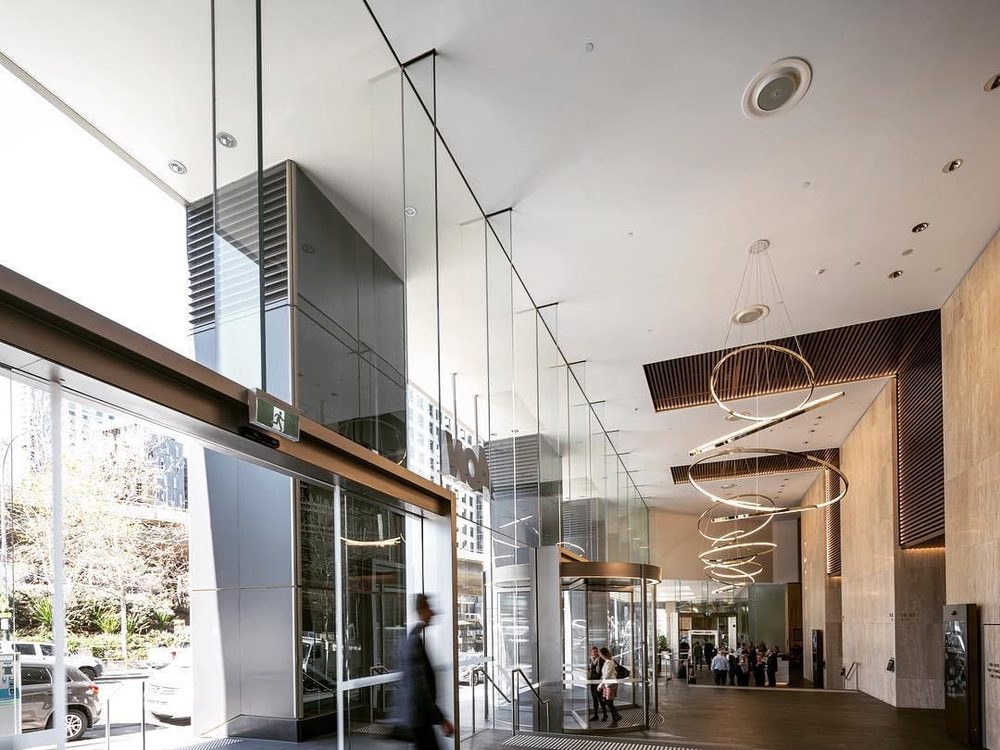
Banking and insurance
Controlled access during trading hours and a secure building outside them. The door and the access control are specified together, because the locking behaviour after hours is usually what the brief really turns on.
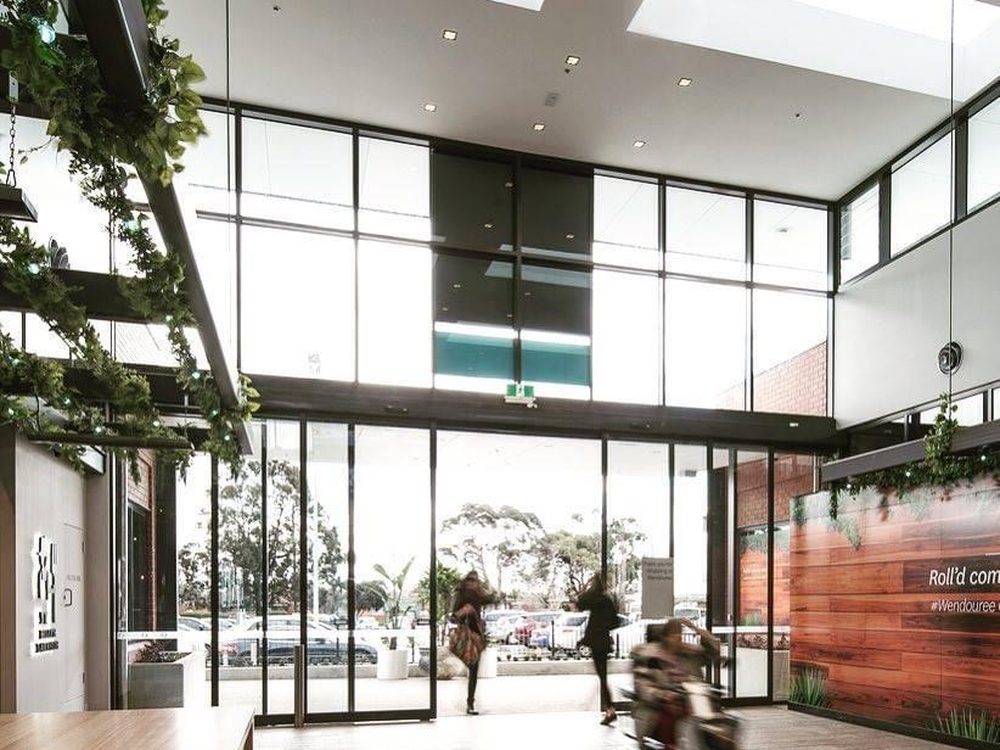
Public facilities
Entrances that stay usable for everyone arriving, all day. Accessibility is the driver here: an automatic door is often the difference between a building somebody can enter independently and one they cannot.
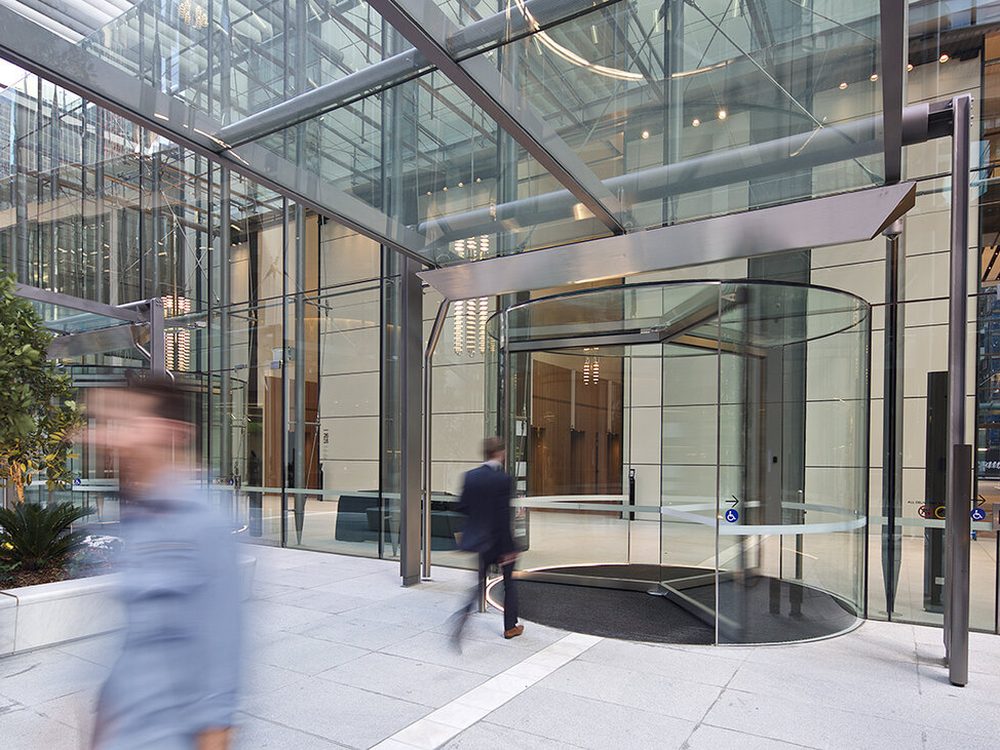
Public transport and airports
Airports, interchanges and terminals run continuous, uneven traffic with luggage and trolleys through it. Wide clear openings and robust sensor coverage matter more than aesthetics on these commercial automatic doors.
Airport entrances add two things a bus terminal does not. Traffic arrives in waves set by arrivals and departures rather than spread across the day, so the entrance is specified for the surge. And landside areas mix public access with controlled zones, which puts access control into the specification from the start. As everywhere, we work on pedestrian entrances only.
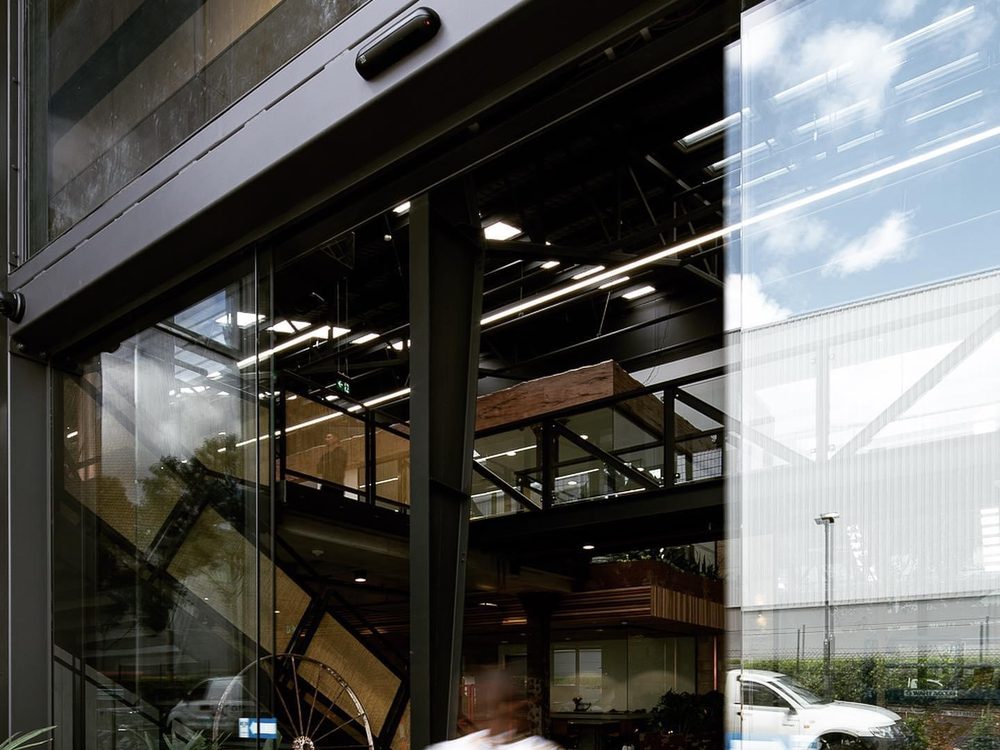
Industrial organisations
Wide bi-parting openings that clear quickly and take daily traffic without complaint, often in dustier conditions than a retail entrance ever sees. Floor guides and rollers wear faster and are checked more often.
Service organisations
Offices, depots and back-of-house entrances where the traffic is lighter but the door still has to work every day. Usually the simplest specification, and the one where a swing operator on an existing door does the job.
Multi-site
Airports are the most demanding version of this, because a terminal combines public retail-scale traffic with a controlled security zone in one building. Our guide to airport automatic doors covers the landside and airside split, wave loading and working on a controlled site.
Estates that span more than one sector
Most of the property groups we work with do not sit in a single sector. A landlord can hold a shopping centre, an office block and a clinic, each with commercial automatic doors on different hardware, installed by different contractors over fifteen years.
We quote those as one schedule rather than door by door, whatever mix of commercial automatic doors the estate has ended up with. Each entrance gets an interval set against its own cycle count, the whole estate sits on one service history, and there is one number to call when something stops. Where parts for an older door are genuinely unobtainable, we will say so and price the upgrade instead of quietly nursing it along.
That is usually the practical argument for putting commercial automatic doors with one supplier: not the rate, but the fact that somebody knows what is fitted where.
Across all of them
What does not change
Whatever the building, the parts that decide whether commercial automatic doors are safe and reliable are the same.
Activation and safety sensors stop a door closing on somebody, and they are tested at every service visit rather than only after a fault. Spares are held in Johannesburg, so a worn belt, roller or floor guide is usually a same-week repair. And every installation is commissioned on site, with speeds, hold-open time and sensor coverage set against the traffic that entrance will actually carry.
We also service commercial automatic doors from other manufacturers, which is what lets a property group with a mixed estate across several buildings put the whole portfolio with one supplier. Requirements for powered pedestrian doors in South Africa are published through SABS.
Commissioning
Commercial glass entrance doors
Most commercial automatic doors are glass, and the glass is not an afterthought on the specification. It carries the weight the operator has to move, it decides what the entrance looks like from the street, and it is governed by safety requirements that apply whether the door is powered or not.
Three decisions sit behind an automated commercial glass entrance. The glazing itself, which sets the leaf weight and therefore the operator; a heavier laminated pane in a wide leaf is a different duty rating from a light one. The framing, which ranges from fully framed aluminium through to frameless arrangements where the glass carries the fittings directly. And the safety requirement for that position, which is decided by where the door sits in the building rather than by preference.
Frameless glass entrances look best and are the least forgiving. The fittings, the floor detail and the alignment all have to be right, because there is no frame to hide a tolerance. Where a building wants that look on a busy commercial entrance, it is worth surveying rather than quoting from a drawing.
We supply aluminium shopfronts and glass entrance systems alongside the automation, which means one party is responsible for the leaf, the glass and the drive rather than three parties pointing at each other when the entrance does not run true.
The hardware inside a commercial entrance
Buyers frequently ask what commercial automatic door hardware actually consists of, usually when comparing two quotations that differ by a wide margin. The short answer is that the operator is one line of six.
- The operator. The drive unit in the header. Specified on leaf weight, clear opening and real traffic.
- Track, carriages and rollers. What the leaf actually runs on. These are the wear parts and the reason a door gets noisy before it gets unreliable.
- Floor guides. Small, cheap, and the first thing to wear in a gritty environment.
- Sensors. Activation and safety are separate functions, and a quotation naming only one has left something out.
- Locking and access control. Whether the entrance simply opens for everyone, or controls who passes and when.
- The header and fixings. What carries the load. On a retrofit this is often the item that decides whether the job is simple or structural.
Asking for those six as separate lines is the single most useful thing a buyer can do with competing quotations for commercial automatic doors. A supplier who cannot break them out is quoting a price rather than a scope.
How the entrance is set up
Hardware alone does not make sectors safe. Opening and closing speed, hold-open time, force and the detection zones are set for the way the doorway is really used, then demonstrated at handover and written down. Most faults we attend are sensors knocked out of alignment rather than motors that have failed.
We walk the opening at handover so the safety zones are proven with a trolley and at normal walking pace, not just on paper.
Aftercare
What a commercial entrance has to survive
Domestic thinking does not transfer. A commercial entrance is used by people who did not choose it, are frequently carrying something, and have no interest in being careful with it. That changes the specification in four ways.
- Duty rating, not width. Traffic decides the operator. Two entrances of identical width in the same building can need very different units because one sits at the till line and the other serves a quiet side lobby.
- Presence sensing that actually covers the leaf path. Commercial automatic doors carry a safety obligation to people who never agreed to use them, which makes the safety sensor arrangement a requirement rather than an upgrade.
- Impact tolerance. Trolleys, cages, luggage and pallet trucks all meet the entrance eventually. Protecting the approach is cheaper than repairing the consequence.
- Reliability under neglect. Nobody in the building is responsible for the door until it stops. An entrance that behaves well when unattended earns its price.
Access control on a commercial entrance
Plenty of commercial automatic doors do not simply open for anyone who approaches. Reception after hours, staff-only crossings, back-of-house corridors and secure lobbies all need the entrance to decide who passes.
That decision sits with the controller, and it is made at specification stage because it changes what is fitted inside the header and how the entrance is wired. Readers, keypads, intercoms and free-exit arrangements all integrate, but the combination has to be chosen against how the building is actually used rather than assembled afterwards. Where the entrance sits on an escape route, what it does on alarm and on power loss is set by the building’s fire strategy and confirmed with the fire consultant, not chosen for convenience.
Buying for a portfolio rather than a door
Property and facilities managers rarely buy one entrance. They inherit twenty across several buildings, installed by different people at different times, and the practical question is how to stop them failing one at a time at the worst possible moment.
Three things make a portfolio manageable. A condition record per entrance, so decisions come from evidence rather than from whoever complained loudest. Service intervals set from each door’s real cycle count rather than one date for the whole estate, because a centre entrance and an office side door wear at completely different rates. And consolidating who attends, since we service and repair any major brand rather than only the operators we supply, which means one contractor can cover a mixed estate instead of four.
That last point matters more than it sounds on commercial automatic doors. Mixed estates are the norm, and the cost of managing four suppliers usually exceeds any saving from keeping each door with its original installer.
Servicing, spares and agreements
Service intervals should follow cycles, not the calendar: a mall entrance can do more work in a month than an office door does in a year. A visit checks and realigns sensors, inspects belt, rollers and guides, re-checks opening and closing force and replaces wear parts before they strand the door.
Consumable and wear items, including belts, rollers, floor guides and seals, are replaced as part of servicing rather than under warranty. A service level agreement runs alongside the product warranty; it neither replaces nor extends it.
Budget
How a commercial entrance is priced
Four things move the number: the opening width, the glass, the sensor layout and whether access control is included. Send the opening size and a photograph and a quotation usually follows within two working days.
Figures exclude VAT unless the quotation says otherwise, and any published guidance on this site is indicative rather than a fixed price.
Common questions
Questions we are asked
Are the operators made in South Africa?
The MC-125 and MCW-100 are imported and assembled at our Laser Park facility in Johannesburg, where spares and technical support are held locally.
Do you service other manufacturers equipment?
Yes. Where we take over an entrance somebody else installed, we report its condition before committing to a maintenance interval.
What counts as a commercial automatic door?
Any powered pedestrian entrance in a building used by the public or by staff rather than a household: sliding, swing, telescopic, revolving and hermetic. The distinction matters because commercial automatic doors carry safety obligations to people who never chose to use them.
Can you automate a commercial glass door we already have?
Often yes, if the header will carry an operator and the leaf weight and clear opening suit how the entrance is used now. The glass, framing and track are retained and only the drive and sensors are added.
What hardware is included in a quotation?
Ask for six separate lines: operator, track and rollers, floor guides, sensors, locking or access control, and the header and fixings. A quotation that cannot be broken out that way is a price rather than a scope.
Can a commercial entrance control who comes through?
Yes. Readers, keypads, intercoms and free-exit arrangements all integrate, but the combination is chosen at specification stage because it changes what is fitted inside the header and how the door is wired.
From enquiry to working entrance
Most delays on commercial automatic doors are not manufacturing delays. They are decisions that were left until installation day, and they are avoidable if the sequence is understood at the start.
- Enquiry. Opening size, a photograph taken far enough back to show the wall either side and the header above, and an honest idea of daily traffic. That is usually enough to say what fits.
- Survey. On anything structural, frameless, or on an escape route, somebody attends. The floor level, the header capacity and the power position are the three things a photograph cannot settle.
- Specification. Operator, glazing, sensor arrangement, locking and behaviour on alarm and power loss. This is the stage where commercial automatic doors are won or lost, because everything after it is execution.
- Order and lead time. Confirmed in writing, along with what is included and what is by others.
- Installation. Normal hours, after hours or staged, depending on whether the entrance has to stay usable. Say which at quotation, not on the day.
- Commissioning. Forces, speeds, hold-open times and sensor aim set against the real traffic rather than left on a factory default. This is work, and it should appear as work.
- Handover. The manual release shown to staff, the settings recorded, and the service interval agreed on the evidence rather than a default date.
Two items cause most of the slippage. The first is power at the header, which is an electrical job before it is a door job and is the commonest reason for a wasted visit. The second is alarm behaviour, which changes what is fitted inside the header and therefore cannot be decided after the operator has been ordered.
Tell us at enquiry stage whether the entrance must stay open during the works and whether a facilities contractor has to sign off. Those two answers shape the programme more than the product choice does.
Quick answers
Quick answers on commercial automatic doors
- Commercial automatic doors are powered pedestrian entrances in buildings used by the public or by staff.
- Commercial automatic doors are specified on traffic and leaf weight, not on opening width alone.
- Commercial automatic doors are usually glass, and the glazing sets the leaf weight the operator must move.
- Commercial automatic doors quoted properly break out six lines: operator, track, floor guides, sensors, locking and header.
- Commercial automatic doors carry a safety obligation to people who never chose to use them.
- Commercial automatic doors can control access with readers, keypads, intercoms and free-exit arrangements.
- Commercial automatic doors on an escape route follow the building’s fire strategy, confirmed by the fire consultant.
- Commercial automatic doors in a mixed estate can be serviced by one contractor, because we attend any major brand.
- Commercial automatic doors need service intervals set per entrance from the real cycle count.
- Commercial automatic doors can often be retrofitted, keeping the existing glass, framing and track.
- Commercial automatic doors carry a 24-month warranty on the operator; glass and wear parts are quoted separately.
- Commercial automatic doors are supplied, installed and serviced nationwide from Johannesburg.
In short
Commercial automatic doors at a glance
- Commercial automatic doors are quoted against the opening we measured, not a catalogue price.
- Ask about commercial automatic doors and we confirm the opening, the head and the power position first.
- Commercial automatic doors are installed and commissioned by our own technicians.
- Commercial automatic doors carry a 24-month warranty on the operator.
Tell us about the building
Tell us the sector, the clear opening width and height, and roughly how busy the entrance is, and we will specify and price the commercial automatic doors that suit it. If you have several buildings, we will quote them on one schedule.