
Automatic door operators Nairobi: supplied and supported from South Africa
Automatic door operators Nairobi projects come to us for one reason more than any other: somebody has specified a sliding entrance for a Nairobi building and cannot find a supplier who will still be answering the phone in year three. We export the MC-125 and the MCW-100 into Kenya, and we install and commission them ourselves.
That is the part that matters. An operator in a crate is not an entrance. Automatic door operators Nairobi work is quoted as equipment plus our own commissioning team, because the setting-up against the real leaf, the real floor and the real traffic is where an entrance is won or lost.
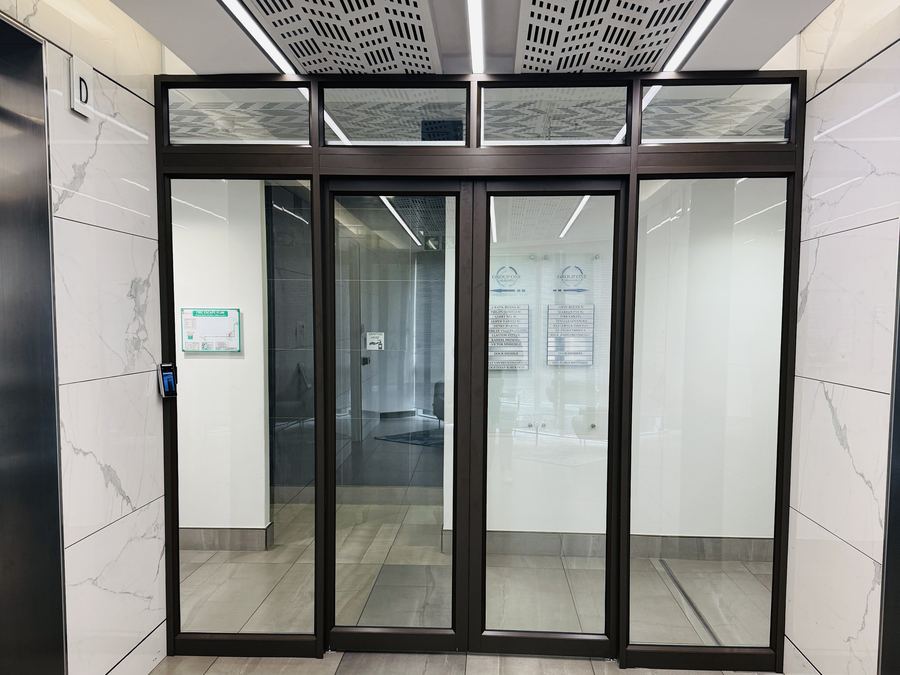
What Nairobi actually does to an entrance
Automatic door operators Nairobi specifications start from a climate that is not the environment most people picture when they picture East Africa. It sits at roughly 1 795 metres, which makes it markedly cooler than the coast and gives it a wide daily temperature swing. That swing is the first thing we design around, because a controller that is cold at dawn and hot in afternoon sun inside a header box is a controller that expands, contracts and eventually develops intermittent faults.
The second thing is dust. Nairobi has two dry stretches between its long rains and its short rains, and in those dry periods airborne dust gets into everything. For a sliding entrance that means the track and the carriage wheels, which is exactly where dust turns a smooth quiet run into a grinding one over a single season. On automatic door operators Nairobi specifications we treat dust as the primary wear driver, not an afterthought.
The third is what Nairobi is not, and it is worth saying because it changes the answer. Nairobi is inland. Salt-air corrosion, which dominates our coastal specifications elsewhere, is not the Nairobi problem. A client who has been sold a marine-grade specification for a Nairobi office lobby has been sold something they did not need.
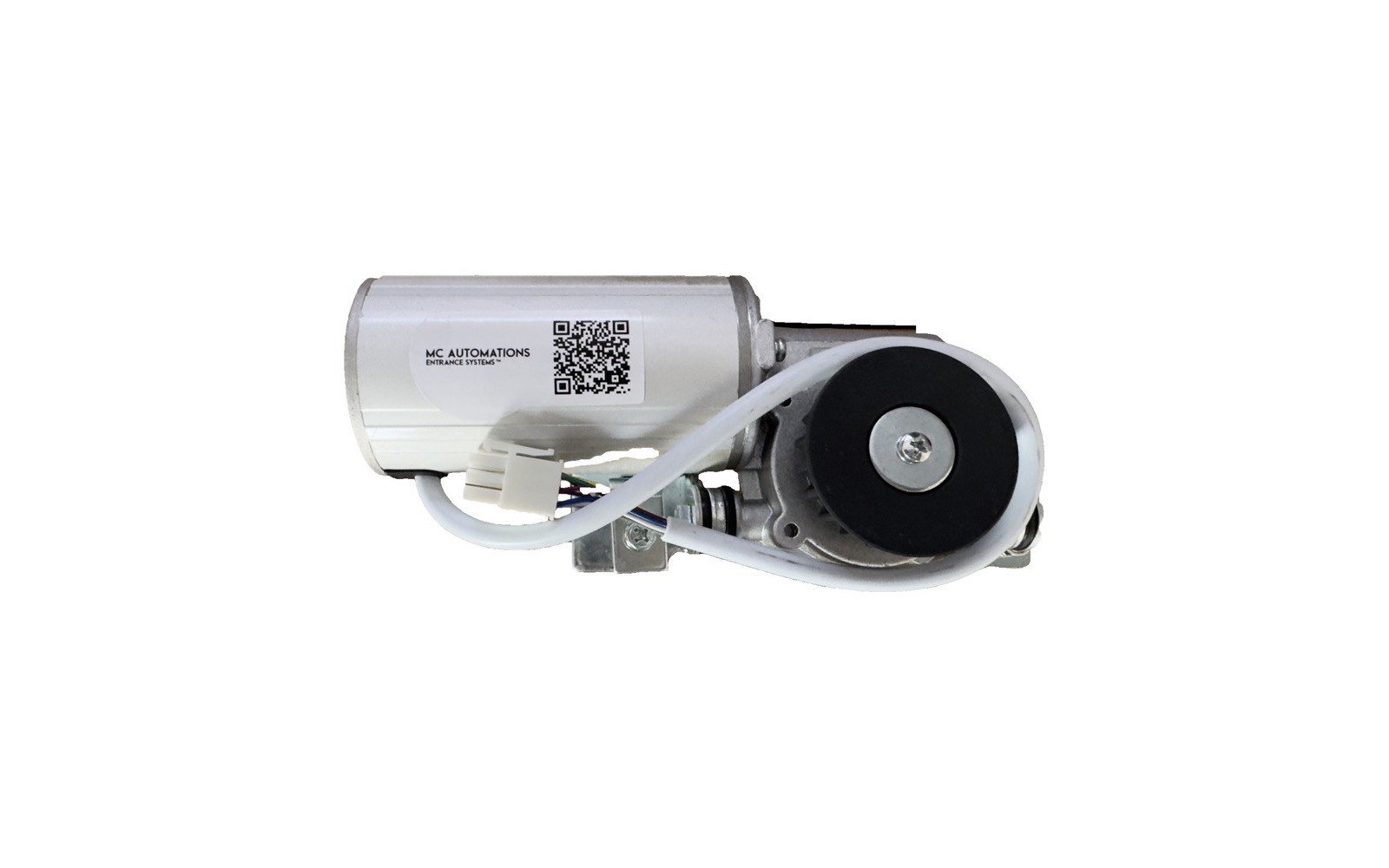
The two operators we export to Kenya
On automatic door operators Nairobi projects we export two units and only two, and the discipline is deliberate. A narrow range means we hold the spares that matter and our technicians know both units without opening a manual.
The MC-125 sliding door operator is the unit behind most automatic door operators Nairobi enquiries. It drives single and bi-parting sliding leaves and it is what we specify for retail entrances, office lobbies, hospital corridors and hotel thresholds. In South Africa it starts at R27 590 excluding VAT.
The MCW-100 swing door operator handles swing leaves. Its real value in Nairobi is refurbishment, where an existing timber or steel door in a good building has to become automatic without replacing the whole entrance. In South Africa it starts at R15 900 excluding VAT.
Both are South African prices and both are the operator only. They are not the landed cost of automatic door operators Nairobi projects, and we will not publish that figure. Freight, duty and routing move, and a number published today misleads whoever budgets against it in six months. Cross-border work is quoted per project, in writing.
Both units are imported and assembled at our Laser Park facility in Johannesburg. We do not call ourselves a manufacturer of automatic doors, and we would rather say so plainly than let a brochure imply otherwise. The 24-month warranty is on the operator and it travels with the operator into Kenya.
Power, and why it changes the specification
Grid supply is a live consideration for automatic door operators Nairobi installations and on automatic door operators Nairobi projects, and pretending otherwise produces entrances that fail in ways nobody budgeted for. An automatic door is a motor, a controller and a sensor loop, and the controller is the component that objects to unstable supply. Sags and spikes do not usually kill it on the day. They shorten its life quietly and then it fails on a Saturday.
Where we know supply at a building is unstable, we say so in the quotation and we specify accordingly rather than discovering it during commissioning. We also talk through what the entrance should do when power goes away entirely, because that is a design decision and not a default. An entrance on an escape route has a different correct answer to a back-of-house door, and the client needs to make that choice deliberately.
We install, we do not just ship
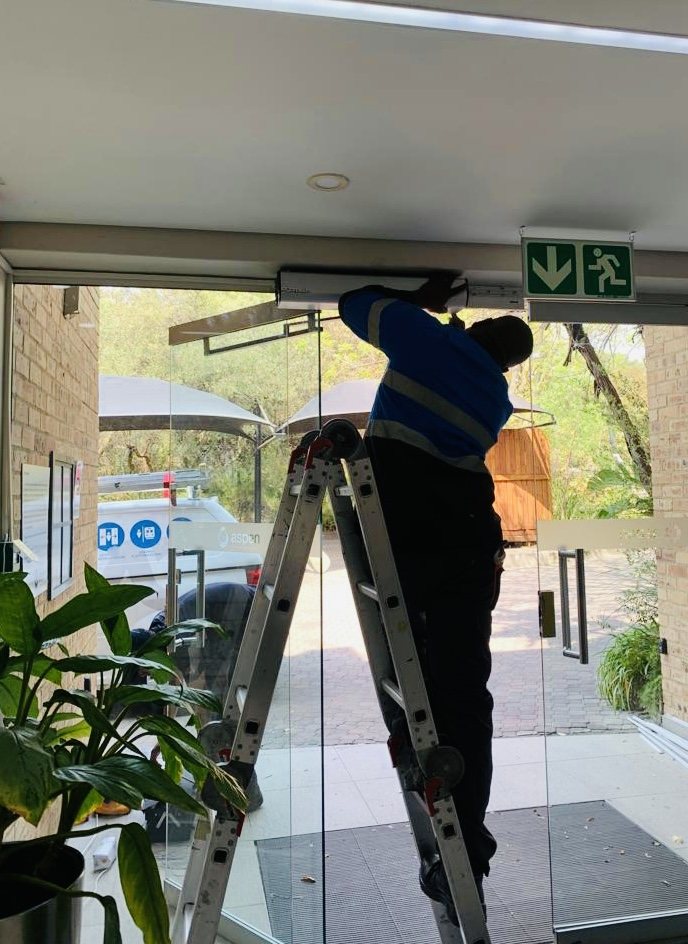
Every automatic door operators Nairobi project includes our own installation and commissioning. We are not willing to warrant an entrance that somebody else fitted from a photograph and a manual, and we would rather lose the enquiry than pretend that is the same thing.
On automatic door operators Nairobi work, commissioning is where opening speed, hold-open time, safety sensor fields and the reversal behaviour are set against that specific opening and that specific traffic. Those settings are not universal. A hospital corridor and a supermarket threshold in the same city want genuinely different numbers, and a door set to the wrong ones is either an irritation or a hazard.
What we are not responsible for in Kenya
This is the paragraph most suppliers leave vague, so here it is plainly. We do not hold Kenyan building approvals or Kenyan fire approvals. Where an entrance sits on an escape route, interacts with a fire strategy, or has to satisfy a local accessibility requirement, that is your local consultant’s work. We will give them every technical detail they ask for about the operator. We will not sign a compliance certificate for a jurisdiction we do not practise in, and you should be wary of any supplier who offers to.
We also do not do roller shutter doors, and we do not supply, fit, retrofit or service door closers. Pedestrian automatic entrances are the whole of what we do.
Getting a Nairobi quotation right first time
An automatic door operators Nairobi quotation starts with the opening, not the operator. Most of the specification errors we see in Kenyan enquiries come from somebody ordering against a door width when the number that actually decides the unit is leaf weight.
For automatic door operators Nairobi quotations, send the structural opening in millimetres, the leaf weight and what the leaf is made of, the header depth available above the opening, the floor condition across the threshold, and one photograph of what is there now. Tell us whether the entrance is under cover or in direct sun, how dust-exposed the location is, and whether mains supply at that building is stable. Give us a rough sense of openings per day, because cycle count sets the duty class and the duty class sets the service interval.
That is enough for a real answer. Anything less and we simply come back with questions, which costs a week each time.
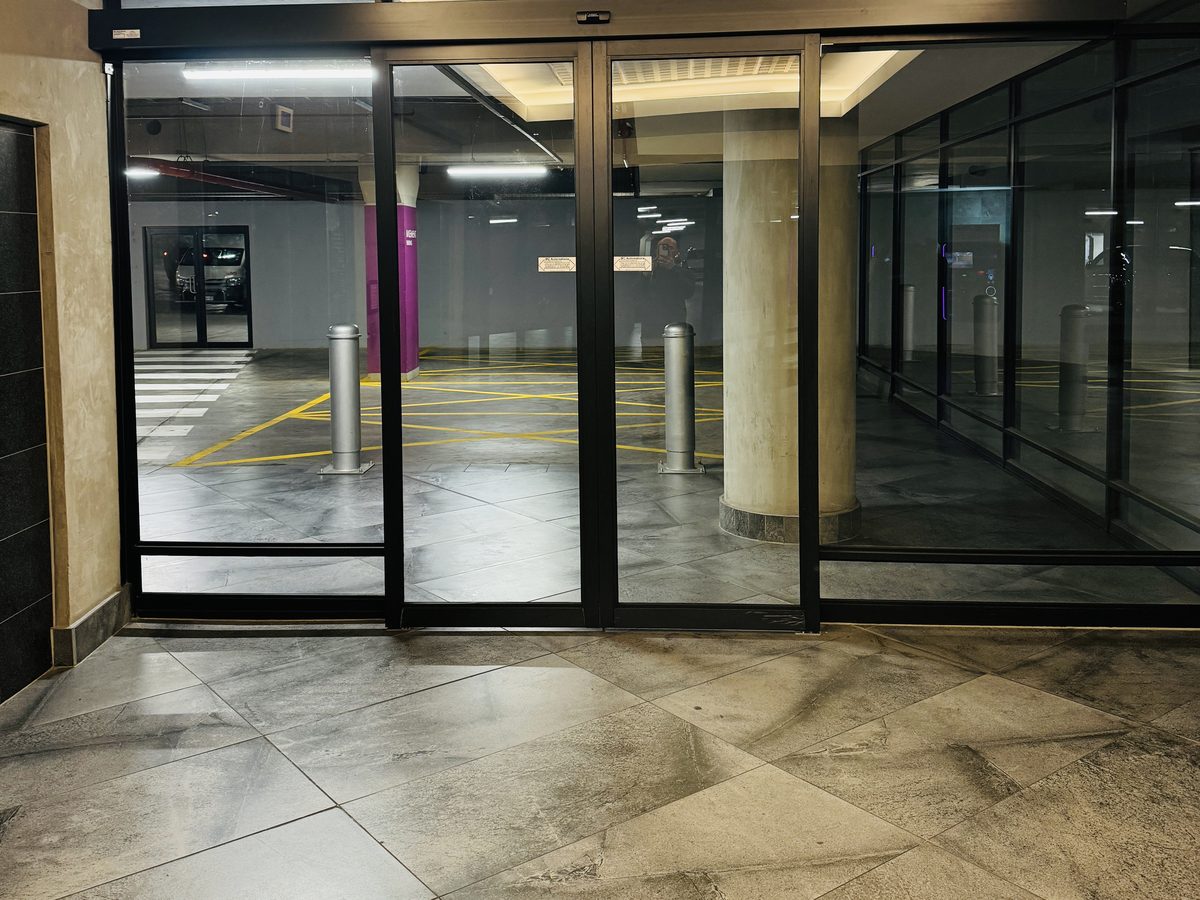
Maintaining an entrance in Nairobi after we leave
Our 24/7 breakdown line on 010 412 0062 is real and it is answered. What it does not mean is a technician in Nairobi the same day. Our same-day call-out commitment is a Gauteng commitment and we will not blur that to make this page read better.
So on automatic door operators Nairobi projects we design for the distance instead of promising it away. We agree a spares holding, sized against that building’s traffic and dust exposure rather than from a standard list, so the parts most likely to be needed are already in the building. We train the client’s own maintenance people during commissioning, so somebody local can do routine work and first-line diagnosis. And we support that person by phone and email rather than pretending a flight is a maintenance plan.
For third-party equipment already in a Nairobi building, we service GEZE, dormakaba, ASSA ABLOY, record and TORMAX systems. We are an independent service provider and we are not an agent, distributor or authorised representative of any of those companies.
Slide or swing for a Nairobi opening
Most automatic door operators Nairobi enquiries arrive asking for a slide, because a slide is what people picture. It is often right and it is not always right, and the deciding factor is usually structural rather than aesthetic.
On automatic door operators Nairobi projects a slide still needs somewhere for the leaf to park. That sounds obvious until you are standing at an opening where the adjacent wall carries services or a column sits exactly where the parked leaf would go. It also needs a header that can carry the operator and the leaf weight, and in refurbishment work that header is very often the constraint that decides the whole project.
A swing needs clear arc and nobody standing in it, which makes us cautious about swing operators on busy retail thresholds. Where a swing earns its place is refurbishment of a sound existing door. For automatic door operators Nairobi projects there is one further consideration: a slide exposes more moving parts to airborne dust than a swing does, and across a five-year horizon in a dusty inland city that occasionally tips a marginal decision toward the swing.
What a Nairobi service interval actually looks like
Automatic door operators Nairobi service intervals are set by cycles and by environment, not by the calendar, and on automatic door operators Nairobi installations the environment does real work. A door in a dust-exposed location needs its track and carriage attention sooner than the same door in a sealed, air-conditioned lobby, even at identical cycle counts.
We set the interval at commissioning against the actual duty of that entrance and we write it down, along with the commissioning settings themselves. That written baseline matters more than people expect. Settings drift, people adjust things, and a year later somebody needs to know what the opening speed and hold-open time were supposed to be rather than experimenting on a live entrance.
Where a building has several entrances at different duties, we do not put them all on one interval to keep the paperwork tidy. The high-cycle main entrance and the low-cycle side door are different machines in practice, and treating them the same either wastes money or produces a failure.
The sectors we quote into
Automatic door operators Nairobi enquiries reach us mainly from commercial office, retail, healthcare and hospitality, and each of those changes the specification in a way worth naming.
For automatic door operators Nairobi work, office lobbies are usually about appearance and quiet running, with moderate cycles and a controlled interior. Retail is the opposite: high cycles, dust and grit tracked in from outside, and an entrance that absolutely cannot be out of service on a trading day. Healthcare adds hygiene and a requirement for reliable, predictable operation where people are moving beds and trolleys through an opening. Hospitality sits between them and cares a great deal about noise.
We would rather ask which of those you are than quote a generic entrance. The operator may well be the same MC-125 in all four cases, but the duty class, the sensor arrangement, the safety settings and the service interval will not be.
Why a narrow product range helps you
It is tempting to read a two-unit range as a limitation. On automatic door operators Nairobi projects it is the opposite, and the reason is distance.
A supplier carrying fifteen operator families across three brands cannot hold deep spares for any of them, and cannot have technicians who know each one thoroughly. When the failure happens two thousand kilometres from the workshop, both of those become the client’s problem. A narrow range means the spares that matter are actually held, the fault on the phone is a fault we have seen many times, and the part we tell you to fit is a part we can describe precisely.
Refurbishment versus new build
Automatic door operators Nairobi work splits fairly evenly between new build and refurbishment, and the two run differently enough to be worth separating.
On automatic door operators Nairobi new build we can influence the opening before it is poured, which is the cheapest moment to fix anything. Header depth, parking space for the leaf and a clean floor line across the threshold cost nothing at design stage and cost a great deal afterwards.
On refurbishment we take the building as we find it. That is where the MCW-100 earns its keep, and it is also where a site survey stops being optional. Automatic door operators Nairobi refurbishments fail when somebody assumes the existing frame is square, the existing header is sound and the existing floor is level. One photograph tells us which assumptions to stop making.
Automatic door operators Nairobi: the short version
If you read nothing else, this is the whole position. We export two units into Kenya, the MC-125 for sliding leaves and the MCW-100 for swing leaves, both imported and assembled at Laser Park in Johannesburg.
Every automatic door operators Nairobi project includes our own installation and commissioning team. We quote per project and in writing, and we publish no landed price, no freight figure and no lead time, because those move. The 24-month operator warranty travels into Kenya; the same-day attendance does not, and that remains a Gauteng commitment.
We hold no Kenyan building or fire approvals, and on any automatic door operators Nairobi job touching an escape route your local consultant owns that question. Support at distance is designed in through an agreed spares holding and your own team trained at handover.
Who does what: Coetz Glazing and MC Automations
These are two businesses under the same ownership and it is worth being clear about which one you need, because it decides who you should be talking to.
Coetz Glazing supplies. If your question is about buying automatic door equipment for Nairobi and what it costs to procure, Coetz covers that market at country level in its automatic doors Kenya guide.
MC Automations installs. This page is the installation and commissioning side. If your question is which operator suits your opening, who fits it, who commissions the safety systems and who maintains it afterwards, that is automatic door operators Nairobi work and it is us.
Most projects need both, which is why we quote them as one piece of work rather than sending you between two companies.
Frequently asked
Do you actually come to Nairobi, or do you only ship the operator?
We come to Nairobi. Automatic door operators Nairobi projects are quoted as equipment plus our own installation and commissioning team, because we will not warrant an entrance fitted by somebody who has never seen the unit.
What will it cost landed in Nairobi?
We will not publish that number. Freight, duty and routing change, and a stale figure misleads whoever budgets against it. Our South African operator prices are open, R27 590 excluding VAT for the MC-125 and R15 900 for the MCW-100, and every Kenyan project is quoted in writing against your actual opening.
Is a marine specification needed in Nairobi?
Usually not. Nairobi is inland at roughly 1 795 metres and salt-air corrosion is not its problem. Dust during the dry seasons and a wide daily temperature swing are. If somebody has quoted you a coastal specification for a Nairobi lobby, ask them why.
Can you certify the entrance against Kenyan fire regulations?
No. We do not hold Kenyan building or fire approvals. We give your local consultant the full technical detail on the operator and they carry the compliance question in their own jurisdiction.
Who services it once you have flown home?
On automatic door operators Nairobi installations, ideally your own facilities team, trained by us at handover and working from a spares holding we agree up front. We back them on 010 412 0062. We also service GEZE, dormakaba, ASSA ABLOY, record and TORMAX equipment already in the building, as an independent provider and not as anyone’s agent.
Talk to us about a Nairobi entrance
If you have an opening, a building and a date, we can quote it. Send the leaf weight, the structural opening, a photograph and a note on dust exposure and power stability, and you will get a real answer rather than a brochure answer.
Call 010 412 0062 or use the request a quote form. Our automatic doors Africa page explains how cross-border projects run generally, and the automatic door servicing page covers how we structure maintenance. Wider guidance on powered pedestrian doors is published by the South African Bureau of Standards.