
Automatic door operators Gaborone: supplied and supported from South Africa
Automatic door operators Gaborone projects differ from the rest of our African work in one important way: Botswana is close. Road freight from our Laser Park facility is straightforward, the border is a day’s work rather than a logistics exercise, and that changes what we can sensibly promise. We export the MC-125 and MCW-100 into Botswana and install and commission them ourselves.
It does not change everything. Automatic door operators Gaborone installations still live in one of the dustiest and hottest environments we specify for, and proximity is no substitute for getting that specification right.
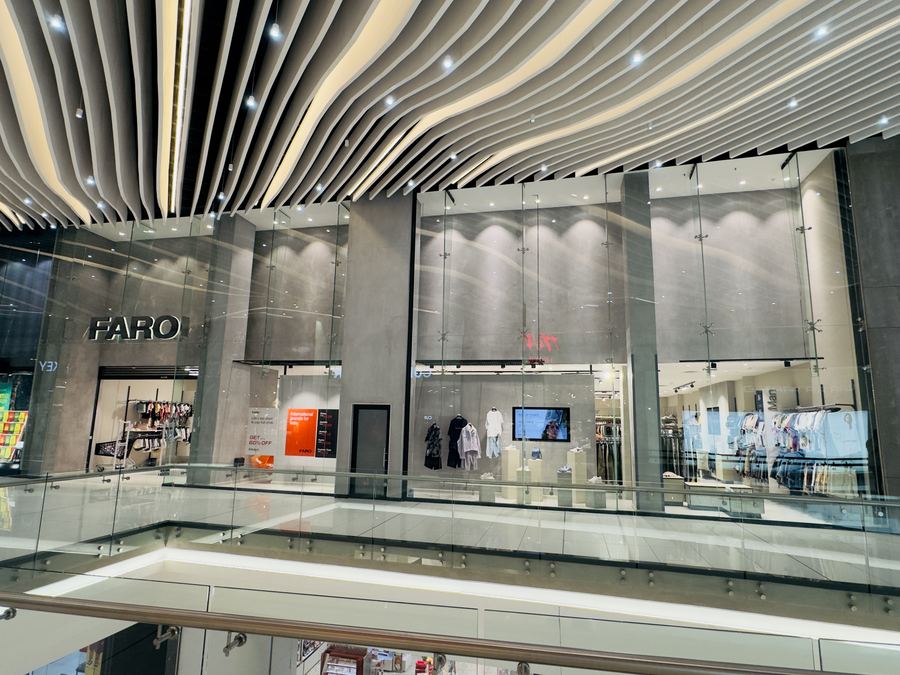
Dust is the whole design problem
Gaborone is semi-arid. For most of the year the defining environmental factor for an automatic entrance is airborne dust, and it is a more destructive force on sliding gear than clients expect.
On automatic door operators Gaborone installations dust works into the track and into the carriage wheels. It does not cause a sudden failure. It turns a smooth, quiet run into a grinding one over a season, and the operator compensates by working harder, drawing more current and wearing faster. By the time somebody reports that the door sounds different, the drive has been fighting the leaf for months.
On automatic door operators Gaborone specifications we therefore treat the mechanical path as the priority: the track, the carriage, the guides and how easily all three can be cleaned. An entrance that is hard to service properly in a dusty city will not be serviced properly, whatever the contract says.
Heat, and what it does to a controller
Summer temperatures in Gaborone are high, and a header box in direct sun is a considerably harsher thermal environment than the ambient reading suggests.
Controllers on automatic door operators Gaborone sites have a working temperature range. Run one persistently near the top of that range and you do not usually get a clean failure, you get intermittent faults that are extremely difficult to diagnose from a distance. On automatic door operators Gaborone projects we ask about orientation and shading specifically, because a west-facing entrance in full afternoon sun and a sheltered north-facing one are not the same job.
What Gaborone is not is coastal. Salt-air corrosion, which dominates our Maputo and Lagos specifications, is irrelevant here. If somebody has quoted you a marine specification for a Gaborone building, ask them why, because you are paying for protection against a problem you do not have.
The two operators we export to Botswana
We export two units and only two. On automatic door operators Gaborone work that narrowness is a feature, because it means the spares that matter are held and our technicians know both units thoroughly.
The MC-125 sliding door operator drives single and bi-parting sliding leaves and covers most automatic door operators Gaborone enquiries: retail, banking, government buildings, offices and hotels. In South Africa it starts at R27 590 excluding VAT.
The MCW-100 swing door operator handles swing leaves and is our refurbishment answer, making a sound existing door automatic without replacing the entrance. In South Africa it starts at R15 900 excluding VAT.
Both are South African prices for the operator alone. They are not the landed cost of automatic door operators Gaborone projects. Even on a short road route we quote per project, in writing, because duty and handling still apply and a published figure would be a guess.
Both units are imported and assembled at our Laser Park facility in Johannesburg. We do not call ourselves a manufacturer of automatic doors. The 24-month warranty is on the operator and it travels into Botswana.
What proximity does and does not buy you
This is where we have to be careful, because proximity is the easiest thing to oversell.
What being close genuinely buys is practicality. Road freight from Laser Park to Gaborone is a manageable run, so getting equipment and a commissioning team there is not the exercise it is for West Africa. A spares consignment is a road trip rather than a shipment. Our response to a serious problem is realistically measured in days rather than in weeks.
What it does not buy is a same-day technician. Our same-day call-out commitment is a Gauteng commitment. Botswana is close, but it is another country with a border, and we are not going to print a response time on this page that we cannot hold to on a bad day. What we will do is state the realistic commitment for your specific site in the quotation, in writing.
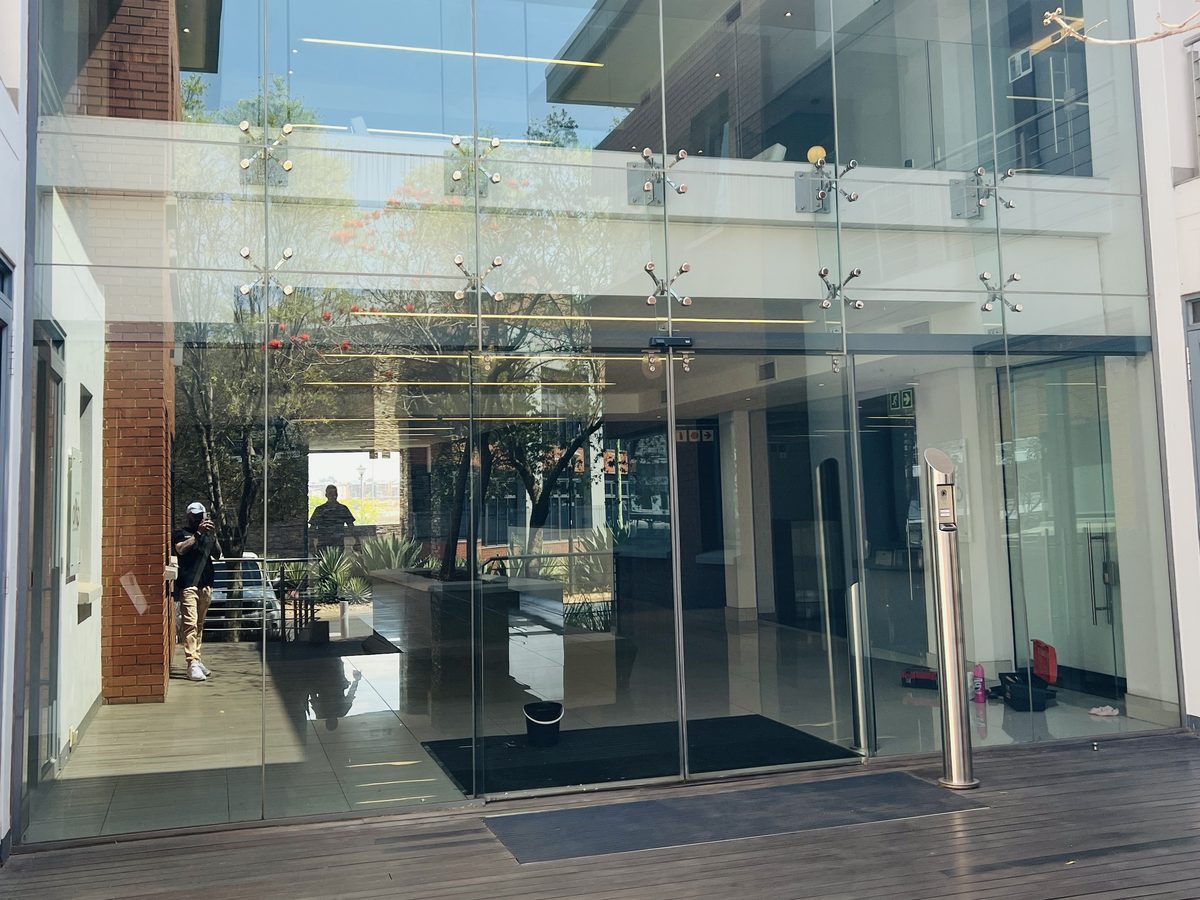
We install and commission
Every automatic door operators Gaborone project includes our own installation and commissioning team. Commissioning is where opening speed, hold-open time, safety sensor fields and reversal behaviour are set against that specific leaf and that specific traffic, and in a dusty environment it is also where we set the service expectation honestly.
On automatic door operators Gaborone work, handover matters more than the paperwork suggests. We want the client’s own maintenance people watching the commissioning, seeing the operator opened, and learning the two or three faults that account for most call-outs. We write down the commissioning settings for that door so that a year later nobody is guessing what the opening speed was supposed to be.
What we are not responsible for in Botswana
Plainly. We do not hold Botswana building approvals or Botswana fire approvals. Where an entrance sits on an escape route, forms part of a fire strategy or must satisfy a local accessibility requirement, that is your local consultant’s work. We supply them every technical detail on the operator. We do not sign compliance certificates for jurisdictions we do not practise in.
We also do not do roller shutter doors, and we do not supply, fit, retrofit or service door closers. Pedestrian automatic entrances are the whole of our business.
Service intervals in a dusty city
Automatic door operators Gaborone service intervals are driven by cycles and by contamination, and here contamination usually leads.
The same operator on the same duty will need attention sooner in Gaborone than in a sealed, air-conditioned interior elsewhere. That is not a sales position, it is what the track looks like when we open it. We set the interval per entrance at commissioning against actual duty and actual exposure, write down the reasoning, and revisit it once we have seen how that door behaves in practice.
Where a building has several entrances at different duties we do not put them all on one schedule for tidiness. A high-cycle main entrance and a low-cycle side door are different machines, and treating them identically either wastes money or produces a failure.
Maintaining an entrance after we leave
Our 24/7 breakdown line on 010 412 0062 is real and answered. On automatic door operators Gaborone installations we pair that with an agreed spares holding, biased toward the wear items that dust reaches first, and with the client’s own team trained to do routine cleaning and first-line diagnosis.
For third-party equipment already in a Gaborone building we service GEZE, dormakaba, ASSA ABLOY, record and TORMAX systems. We are an independent service provider and we are not an agent, distributor or authorised representative of any of those companies.
Slide or swing for a Gaborone opening
Most automatic door operators Gaborone enquiries ask for a slide. It is usually right, and the deciding factor when it is not is structural rather than aesthetic.
A slide needs somewhere for the leaf to park, a header that can carry the operator and the leaf weight, and a clean floor line across the threshold. On refurbishment the header is frequently the constraint that decides the project. A swing needs clear arc with nobody standing in it, which makes us cautious on busy retail thresholds, but it is the right answer for making a sound existing door automatic.
There is a dust-specific consideration. A slide exposes more moving parts to airborne contamination than a swing does, and across a five-year horizon in Gaborone that difference is real. It occasionally tips a marginal automatic door operators Gaborone decision toward the swing where a cleaner environment would have gone the other way.
Getting a Gaborone quotation right first time
An automatic door operators Gaborone quotation starts with the opening, not the operator. Most specification errors come from ordering against a door width when leaf weight is the number that decides the unit.
For automatic door operators Gaborone quotations, send the structural opening in millimetres, the leaf weight and material, the header depth available, the floor condition and one photograph. Then the local answers: how exposed the entrance is to dust, which way it faces and whether it takes direct afternoon sun, and whether mains supply at that building is stable. Add a rough openings-per-day figure, because cycle count sets the duty class and the duty class sets the service interval.
The sectors we quote into
Automatic door operators Gaborone enquiries come mainly from retail, government and institutional buildings, banking and hospitality.
For automatic door operators Gaborone retail, high cycle with grit tracked in from outside and an entrance that cannot be out of service on a trading day. Government and institutional work tends to be moderate cycle but long-life, where the question is what the entrance costs over fifteen years rather than at purchase. Banking wants controlled, predictable operation. Hospitality cares about quiet running and appearance.
The operator may be the same MC-125 across all four. The duty class, sensor arrangement, safety settings and service interval will not be.
Refurbishment versus new build

Automatic door operators Gaborone work splits between new build and refurbishment, and the two run differently enough to separate.
On new build we can influence the opening before it is poured, which is the cheapest moment to fix anything at all. Header depth, somewhere for the leaf to park and a clean floor line across the threshold cost nothing at design stage and a great deal once the concrete is down.
On refurbishment we take the building as we find it, and that is where a site survey stops being optional. Automatic door operators Gaborone refurbishments go wrong when somebody assumes the existing frame is square, the header is sound and the floor is level. In a dusty climate there is a further check, which is what condition the existing threshold and guides are in, because fitting a good operator above a worn floor track simply moves the problem.
Why a narrow product range helps at distance
A two-unit range looks like a limitation until there is a fault and the workshop is in another country.
A supplier carrying many operator families cannot hold deep spares for any of them, and cannot have technicians who know each one thoroughly. On automatic door operators Gaborone projects that gap becomes the client’s problem. A narrow range means the spares that matter are genuinely held, the fault described on the phone is one we have seen many times, and the part we tell somebody to fit is one we can describe precisely enough for a local hand to fit it correctly.
Planning for the life of the entrance, not the purchase
The question that decides what an automatic entrance really costs is not the purchase price. It is what it costs to keep running for fifteen years, and in Gaborone the dominant variable in that sum is contamination.
An automatic door operators Gaborone installation that is cleaned and adjusted on a sensible interval will comfortably outlast one that is left alone, and the gap between the two is far larger than the difference between one good operator and another. That is why we would rather have an honest conversation about the service interval at quotation stage than win the order on a low number and have the entrance disappoint in year four.
It is also why we write the commissioning settings down. An entrance that has drifted from its commissioned state is not obviously broken, it is just worse, and without a baseline nobody can tell how far it has moved.
A note on cross-border warranty claims
Warranty is simple in principle and gets muddled in practice, so here is how it works on automatic door operators Gaborone projects. The 24-month warranty is on the operator. If the unit is defective we replace or repair the unit, and the fact that it sits in Botswana does not change that obligation.
What the warranty does not cover is the same as anywhere: damage from a power event, damage from an entrance being forced, or wear accelerated by a door that was never cleaned. In a dusty city that last one matters, because a track packed with grit will shorten the life of a perfectly sound operator and that is a maintenance question rather than a warranty question. We would rather set that expectation at the quotation than argue about it in year two.
Automatic door operators Gaborone: the short version
We export two units into Botswana, the MC-125 for sliding leaves and the MCW-100 for swing leaves, both imported and assembled at Laser Park in Johannesburg.
Every automatic door operators Gaborone project includes our own installation and commissioning. Road freight makes Botswana our most practical African market, but same-day attendance is still a Gauteng commitment and we will not pretend otherwise. We quote per project in writing and publish no landed price.
Dust and heat decide the specification. Salt does not, because Gaborone is inland. We hold no Botswana building or fire approvals, and support at distance is designed in through an agreed spares holding and your own team trained at handover.
Who does what: Coetz Glazing and MC Automations
These are two businesses under the same ownership and it is worth being clear about which one you need, because it decides who you should be talking to.
Coetz Glazing supplies. If your question is about buying automatic door equipment for Gaborone and what it costs to procure, Coetz covers that market at country level in its automatic doors Botswana guide.
MC Automations installs. This page is the installation and commissioning side. If your question is which operator suits your opening, who fits it, who commissions the safety systems and who maintains it afterwards, that is automatic door operators Gaborone work and it is us.
Most projects need both, which is why we quote them as one piece of work rather than sending you between two companies.
Frequently asked
How quickly can you get to Gaborone?
Faster than anywhere else we work outside South Africa, because it is a road run from Laser Park rather than a shipment. But it is still another country with a border, so same-day attendance remains a Gauteng commitment only. We put the realistic commitment for your site in the quotation in writing.
Do I need a corrosion specification in Gaborone?
No. Gaborone is inland and salt-air corrosion is not its problem. Dust and heat are. A marine specification here is money spent on the wrong risk.
How often will it need servicing?
More often than the same door in a clean interior, because dust drives contamination wear. We set the interval per entrance at commissioning against actual duty and exposure and write down the reasoning rather than applying a standard schedule.
What will it cost landed in Gaborone?
We quote it per project in writing. Even on a short road route, duty and handling apply and a published figure would be a guess. Our South African operator prices are open: R27 590 excluding VAT for the MC-125 and R15 900 for the MCW-100.
Can you service the doors we already have?
Usually yes. We service GEZE, dormakaba, ASSA ABLOY, record and TORMAX equipment as an independent provider, not as anyone’s agent. The constraint on third-party equipment is proprietary control boards, and we will tell you where that risk sits before you sign anything.
Talk to us about a Gaborone entrance
Send the leaf weight, the structural opening, a photograph, and a note on dust exposure and orientation. That is enough for a real answer.
Call 010 412 0062 or use the request a quote form. Our automatic doors Africa page covers cross-border projects generally, and taking over other brands explains how we adopt equipment we did not install. Guidance on powered pedestrian doors is published by the South African Bureau of Standards.