
Modernisation & upgrades
Automatic door modernisation
When an entrance needs more than a service — replacing the drive behind an existing shopfront, upgrading sensors and controls, or automating a door that is still manual. Planned servicing and spare parts are covered on their own pages.
The decision
Upgrade the door, or replace the whole entrance?
The frames, glass and structure of a commercial entrance usually outlast the machinery driving it. Automatic door modernisation is worth quoting whenever the shopfront is sound but the operator is not.
A door is worth modernising when it still runs but limps: slow or jerky movement, doors that reopen for no reason, sensors that need a wave before they see anyone, or an operator nobody can get parts for any more. A well-specified entrance should give around 20 years of service, and a lot of the doors we are called to are nowhere near that but have simply never been maintained.
Replacement makes more sense when the opening itself is wrong for the traffic, when the frame or threshold has failed, or when the leaves are damaged beyond repair. We will tell you which of the two you are looking at before we quote, because automatic door modernisation is usually the cheaper answer and it is not always the right one.
Operators
Replacing the drive, keeping the shopfront
In most cases the operator can be swapped without touching the glass. Our MC-125 sliding operator drives single or bi-parting leaves with clear openings from 1450 mm to 5000 mm and leaves up to 150 kg, and is tested to one million cycles, so an ageing drive on an existing opening can usually be replaced like for like.
That is the core of most automatic door modernisation work: new operator, new belt, rollers and floor guides, existing frames and leaves retained, and a 24-month warranty on what we install.
Sensors and safety
The upgrade that matters most
Sensors are the part of an old entrance most worth attention. They drift out of alignment, get knocked by trolleys, dust over and lose coverage, and a door that has stopped seeing people properly is a safety problem long before it is a breakdown.
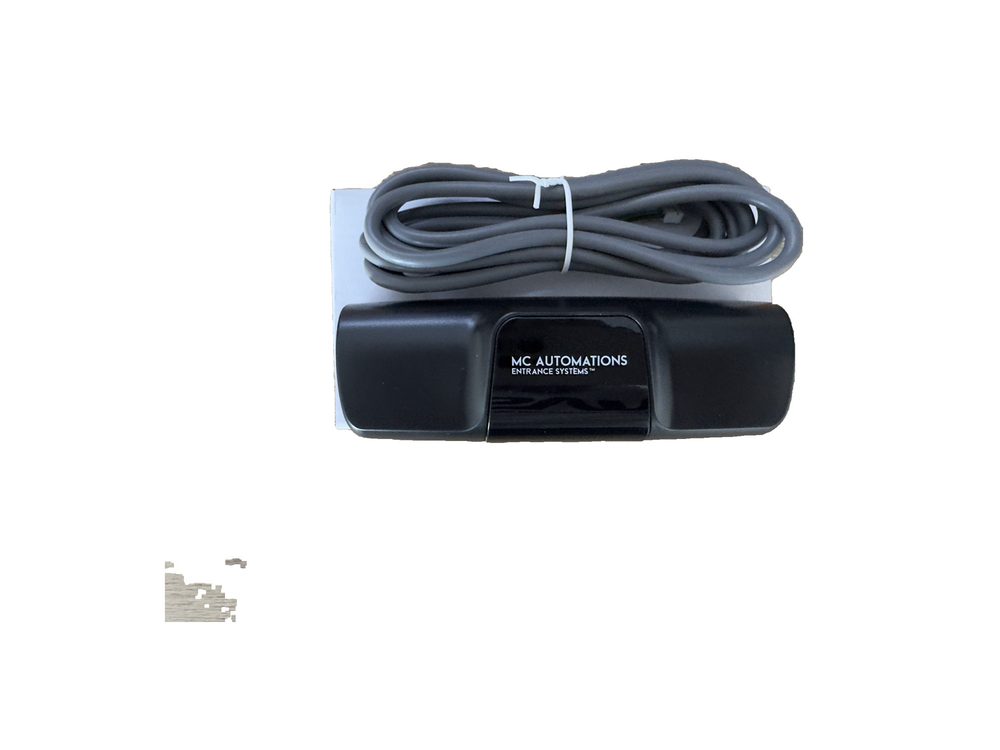
Retrofitting current activation and safety sensors is often the single cheapest improvement to an old door, and it is a normal part of automatic door modernisation rather than a separate project. We test sensor coverage on site rather than assuming the original layout still suits how the entrance is used, and on most automatic door modernisation jobs it no longer does.
Controls and access
Controllers, locking and access control
A new controller brings back the settings an old board has lost: opening and closing speeds, hold-open time, partial opening for winter, and a reliable night mode. It is also the point at which access control can be added to an entrance that never had any.
Card readers, biometrics, intercoms and after-hours locking can usually be interfaced to an existing door as part of automatic door modernisation, which is generally how a building gets secure out of hours without replacing the entrance.
Manual to automatic
Making an existing door automatic
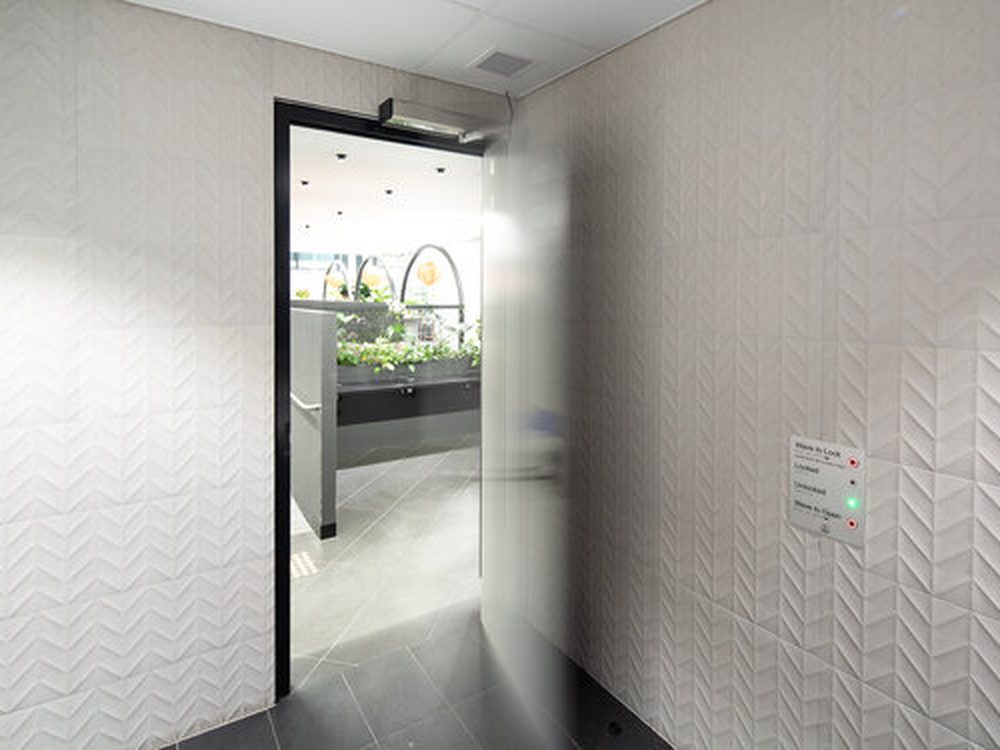
A manual swing door does not have to be replaced to become automatic. The MCW-100 operator converts a new or existing swing door, with an opening angle adjustable from 60° to 110° and leaves up to 150 kg.
This is the most common accessibility request in automatic door modernisation: an entrance that is difficult for anyone with a trolley, a pram or a wheelchair, on a door and frame that are otherwise perfectly good. We assess the leaf, the frame and the headroom on site before quoting, because not every door will take an operator.
Aftercare
Servicing, spares and agreements
Service intervals should follow cycles, not the calendar: a mall entrance can do more work in a month than an office door does in a year. A visit checks and realigns sensors, inspects belt, rollers and guides, re-checks opening and closing force and replaces wear parts before they strand the door.
Consumable and wear items, including belts, rollers, floor guides and seals, are replaced as part of servicing rather than under warranty. A service level agreement runs alongside the product warranty; it neither replaces nor extends it.
Comparing quotes
Reading a quotation properly
Compare the scope rather than the total. A quotation for service & Modernisation should state the opening it was priced against, the equipment it includes and the items it excludes — builders work, structural alteration, electrical supply to the entrance and making good are excluded unless the quotation says otherwise.
Changes after acceptance, to size, configuration, finish, controls or activation, are quoted as a variation before we proceed.
Commissioning
How the entrance is set up
Hardware alone does not make service & Modernisation safe. Opening and closing speed, hold-open time, force and the detection zones are set for the way the doorway is really used, then demonstrated at handover and written down. Most faults we attend are sensors knocked out of alignment rather than motors that have failed.
We walk the opening at handover so the safety zones are proven with a trolley and at normal walking pace, not just on paper.
Common questions
Questions we are asked
Are the operators made in South Africa?
The MC-125 and MCW-100 are imported and assembled at our Laser Park facility in Johannesburg, where spares and technical support are held locally.
Do you service other manufacturers equipment?
Yes. Where we take over an entrance somebody else installed, we report its condition before committing to a maintenance interval.
Does the entrance work during load-shedding?
With a battery backup it keeps operating through a slot. Without one it parks in the fail-open or fail-secure state chosen for the building, and the manual release is demonstrated at handover.
In short
Automatic door modernisation at a glance
- Automatic door modernisation are quoted against the opening we measured, not a catalogue price.
- Ask about automatic door modernisation and we confirm the opening, the head and the power position first.
- Automatic door modernisation are installed and commissioned by our own technicians.
- Automatic door modernisation carry a 24-month warranty on the operator.
- Spares for automatic door modernisation are held in Johannesburg, so a repair does not wait on an import.
Send us the door as it is
A photograph of the operator housing, the clear opening width and height, and a note on what the door is doing wrong is usually enough for us to say whether it is worth upgrading. If it is not, we will say so.
When automatic door modernisation is the better spend
Replacing a whole entrance is not always the right call. Automatic door modernisation keeps the structural opening, the framing and often the leaves, and renews the parts that actually wear. The notes below are the ones we work through on site before recommending either route.
- The header is sound: where the beam and fixings are solid, automatic door modernisation replaces the drive, controller and sensors inside the existing header.
- Parts have become hard to source: an obsolete controller is the most common reason an entrance is modernised rather than repaired.
- Safety has fallen behind: older entrances often have activation but no presence sensing at the threshold, and automatic door modernisation is the point at which that is corrected.
- Cycle counts have risen: an operator sized for the traffic of ten years ago is the part failing now, not the door itself.
- Energy and comfort: tighter closing, correct hold-open times and better sealing reduce how long the opening stands open.
- Access control has changed: readers, interlocks and free-exit devices are added during automatic door modernisation while the header is already open.
- Appearance: new covers, floor guides and glass beads make a modernised entrance read as new without the cost of new framing.
- Downtime: most automatic door modernisation is done in a single visit, which is why it suits trading shopfronts and hospitals.
- Standards: we set force, speed and sensor coverage against the relevant South African standards, which are published by the SABS.
- When we say replace: if the header is corroded, the opening is out of square or the leaves are unsafe, we will say that automatic door modernisation is not the right spend.
A modernisation survey records the existing operator, the leaf weight and width, the sensor layout, the power supply and the condition of the track and guides. That is enough to quote the work as a fixed scope, and to say honestly which parts of the entrance we are keeping. Where an entrance is kept, the operator we install carries the same 24-month warranty as a new installation, and the spares for it are held in Johannesburg.